Article

한국 재래닭과 외래 품종 간 열내성 연관 유전자의 유전적 다양성과 집단 구조 분석

이은정1https://orcid.org/0009-0006-0793-4211, 조은진2https://orcid.org/0000-0003-4800-1603, 김재원3https://orcid.org/0009-0006-0445-3025, 김진형3https://orcid.org/0009-0006-8948-4882, 로샤니3https://orcid.org/0000-0001-6712-3302, 이준헌4,https://orcid.org/0000-0003-3996-9209
Eunjung Lee1https://orcid.org/0009-0006-0793-4211, Eunjin Cho2https://orcid.org/0000-0003-4800-1603, Jaewon Kim3https://orcid.org/0009-0006-0445-3025, Jinhyeong Kim3https://orcid.org/0009-0006-8948-4882, Roshani Fernando3https://orcid.org/0000-0001-6712-3302, Jun Heon Lee4,https://orcid.org/0000-0003-3996-9209
Author Information & Copyright
1충남대학교 동물자원과학부 학부생
2충남대학교 바이오AI융합학과 박사과정생
3충남대학교 축산학과 석사과정생
4충남대학교 동물자원생명과학과 교수
1Undergraduate Student, Division of Animal and Dairy Science, Chungnam National University, Daejeon 34134, Republic of Korea
2Graduate Student, Department of Bio-AI Convergence, Chungnam National University, Daejeon 34134, Republic of Korea
3Graduate Student, Department of Animal Science, Chungnam National University, Daejeon 34134, Republic of Korea
4Professor, Department of Animal Science and Biotechnology, Chungnam National University, Daejeon 34134, Republic of Korea
To whom correspondence should be addressed : junheon@cnu.ac.kr

© Copyright 2025, Korean Society of Poultry Science. This is an Open-Access article distributed under the terms of the Creative Commons Attribution Non-Commercial License (http://creativecommons.org/licenses/by-nc/4.0/) which permits unrestricted non-commercial use, distribution, and reproduction in any medium, provided the original work is properly cited.

Received: Dec 08, 2025; Revised: Dec 12, 2025; Accepted: Dec 12, 2025

Published Online: Dec 31, 2025

ABSTRACT

Global warming-induced heat stress decreases productivity and reduces the survivability of poultry, causing substantial economic losses in the poultry industry. As poultry lack sweat glands, their thermoregulatory capacity is limited, making them highly vulnerable to heat stress. Although Korean native chickens (KNCs) represent an important indigenous genetic resource, research on their heat tolerance remains limited. In this study, we selected 19 heat tolerance-related candidate genes based on previous research and extracted their single nucleotide polymorphisms (SNPs) from next-generation sequencing (NGS) data obtained from 129 individuals, including KNCs, tropical native chickens, and commercial breeds. These SNPs were then used to evaluate genetic diversity and population structure. Principal component analysis (PCA) revealed a clear separation between KNCs and the other populations, indicating distinct genetic differentiation among groups. Although differentiation among KNC lines was relatively low, the overall genetic diversity of KNCs was markedly higher than that of the other populations. This pattern of separation between groups was also confirmed in the results of FST and phylogenetic tree analyses. Overall, our results reveal a distinct genomic profile associated with heat tolerance in KNCs, offering essential information for understanding their unique genetic characteristics compared with other chicken populations. This analysis provides a foundation for future research aimed at enhancing heat tolerance in Korean native chickens.

Keywords: 한국 재래닭; 열대 지역 재래닭; 실용계; 열내성; 유전적 다양성
Keywords: Korean native chicken; tropical native chicken; commercial chicken; heat tolerance; genetic diversity

서 론

최근 지구온난화로 인한 이상기후 현상이 빈번해지면서, 고온 환경은 가축의 생산성과 생존에 심각한 영향을 미치고 있다. 특히 땀샘이 없어 체온 조절이 어려운 가금류는 고온 스트레스에 취약하여 산란율 감소, 면역력 저하, 폐사율 증가 등 다양한 문제를 초래한다(Guo et al., 2022). 이러한 피해는 가축의 생리적 건강과 복지 수준을 저하시킬 뿐만 아니라, 축산업의 생산성 및 경제적 손실로 이어질 수 있다. 따라서 열내성 반응의 유전적 기초를 규명하는 것은 기후 변화에 대응한 지속 가능한 축산을 위한 핵심 과제이며, 고온 적응형 품종의 개발은 산업적·생태적 측면에서 모두 중요하다.

한국 재래닭(Korean native chicken, KNC)은 약 2,000년 전부터 한반도에 존재해 온 재래종과, 국내에서 7세대 이상 사육되며 토착화된 외래종을 포괄하며, 복원·선발 과정을 거쳐 유지되고 있는 유전자원이다(Jin et al., 2017; Lee et al., 2018). KNC는 외래 품종과의 교잡 없이 고유한 형질을 유지해왔음에도 불구하고 이들의 국내 생산량은 2024년도 기준 전체 육계 생산량의 2.5%로 매우 낮으며, 국내에 유통되는 실용 산란계 및 육계의 종계는 대부분 외래종으로 구성되어 있다(Animal and Plant Quarantine Agency, 2025). 이러한 재래닭의 낮은 자급률은 국내 축산업의 지속가능성과 식량주권 측면에서 잠재적 위협 요인으로 작용하고 있어, KNC의 유전적 다양성과 고온 적응 형질을 과학적으로 규명하고 이를 산업적 가치로 전환하기 위한 연구가 필요하다.

이에 본 연구는 재래닭의 고온 환경 적응과 관련된 유전적 기반을 규명하고, 이를 통해 KNC의 열내성 향상을 위한 육종 전략 수립에 기초자료를 제공하는 것을 목적으로 수행되었다. 이를 위해 열내성과 연관된 19개 후보 유전자 구간의 단일염기다형성(single nucleotide polymorphism, SNP) 변이를 분석하여 KNC, 열대 지역 재래닭, 그리고 실용계 집단 간의 유전적 다양성과 집단 구조 차이를 비교하였다. 집단 간 유전적 차이를 다각적으로 평가하기 위해 principal component analysis (PCA)를 통해 전체 변이에서 나타나는 군집 패턴을 확인하고, fixation index (FST) 분석으로 집단 간 분화 수준을 정량적으로 산출하였으며, Nei 유전거리를 기반으로 계통수 분석을 수행하여 집단 간 계통적 관계를 구조적으로 검토하였다. 이러한 통합 분석을 통해 KNC의 열내성 관련 유전적 특징을 외래 집단과 비교하여 종합적으로 규명하고자 하였다.

재료 및 방법

1. 공시동물 및 데이터 수집

본 연구는 KNC 6개 계통(회갈색, 흑색, 적갈색, 황갈색, 백색, 연산오계)에서 계통별 10수씩 총 60수, 열대 지역 재래닭(인도네시아, 방글라데시, 스리랑카, 태국, 베트남) 50수, 실용계 집단(이탈리아, 이란, 미국의 육계 및 산란계) 19수를 포함하여 총 129수의 개체를 대상으로 수행하였다(Table 1).

Table 1. Chicken populations and number of samples used in this study
Category Population No. of sample
Korean native chicken (KNC) KNC Gray-brown 10
KNC Black 10
KNC Red-brown 10
KNC Yellow-brown 10
KNC White 10
KNC Yeonsan Ogye 10
Tropical native chicken Indonesia local chicken 15
Bangladesh local chicken 15
Sri Lanka local chicken 7
Thailand local chicken 6
Vietnam local chicken 7
Commercial chicken Italian White Leghorn 13
Iran commercial broiler 4
USA Rhode Island Red 1
USA White Plymouth Rock 1
Total 129
Download Excel Table

모든 개체의 유전체 정보는 공개 데이터베이스에 제공된 차세대 염기서열 분석(next-generation sequencing, NGS)자료를 활용하였다. KNC 데이터는 농촌진흥청 농업생명공학정보센터(National Agricultural Biotechnology Information Center, NABIC)에서 확보하였으며(https://nabic.rda.go.kr/), 열대 지역 재래닭 및 실용계 집단에 대한 정보는 Galbase 데이터베이스로부터 확보하였다(http://animal.omics.pro/code/index.php/ChickenVar).

2. 후보 유전자 변이 추출 및 데이터 전처리

공개 데이터베이스에서 확보한 두 개의 variant call format (VCF) 파일은 SnpEff (Cingolani et al., 2012) software를 사용하여 Ensembl GRCg6a Release 113을 기준으로 annotation을 수행하였다.

본 연구는 선행문헌에서 열내성과의 연관성이 보고된 유전자들을 대상으로 분석을 수행하였다. 분석 대상 유전자는 열스트레스 조건에서 발현 변화나 기능적 역할이 보고된 경우, 고온 환경 개체군에서 선발 신호가 확인된 경우, 또는 열내성 관련 주요 생물학적 경로에 속하는 경우를 기준으로 선정되었다. 이 기준에 해당하는 총 19개의 후보 유전자(SOCS2, HSPH1, ARPP21, RB1CC1, HSF1, PLCB4, CITED2, HSF3, TSHR, HSP90AA1, HSP70, SIRT1, NFKB2, BAG3, HSP60, PRKCA, HSP25, CDC37, LPAR2) 내 위치하는 SNP 변이를 추출하여 분석에 이용하였다. 각 유전자의 상세 정보는 Table 2에 제시하였다. 추출된 SNP 변이는 bcftools(v1.10.2; Danecek et al., 2021) software를 이용하여 정렬 및 정규화 과정을 수행한 뒤 병합하여 본 연구의 유전적 다양성 및 집단 구조 분석에 활용하였다.

Table 2. List of heat tolerance-related genes, their functions and physical location in Ensembl database
Gene Full name Main function Physical position Reference
SOCS2 Suppressor of cytokine signaling 2 Cytokine-signaling suppressor detected as a selection signal in heat-adapted populations 1:44921695-44928309 Walugembe et al. (2019)
HSPH1 Heat shock protein family H (Hsp110) member 1 Co-chaperone that regulates HSP70 activity, showing increased expression after heat stress 1:176342009-176365543 Pritchett et al. (2023)
ARPP21 cAMP regulated phosphoprotein 21 RNA-binding protein involved in cellular heat response through stress-granule formation and post-transcriptional regulation under heat stress 2:45360038-45491204 Zhuang et al. (2020)
RB1CC1 RB1 inducible coiled-coil 1 Upregulated after heat stress and involved in the inhibition of apoptosis and the regulation of programmed cell death 2:109934195-110008988 Luo et al. (2014)
HSF1 Heat shock factor 1 Key transcription factor activated under heat stress to induce HSP expression 2:130889350-130994715 Rachman et al. (2024)
PLCB4 Phospholipase C beta 4 Involved in immune defense, energy metabolism, and oxidative stress response, and identified as a selection signal in heat-adapted populations 3:14057963-14274875 Asadollahpour Nanaei et al. (2022)
CITED2 CBP/p300-interacting transactivator with ED-rich tail 2 Transcriptional co-activator that protects cells from heat stress by inhibiting hypoxia-induced apoptosis 3:54058268-54075055 Wang et al. (2015)
HSF3 Heat shock factor 3 Key heat-responsive transcription factor activated by severe heat stress to induce HSP expression 4:281393-297917 Kawazoe et al. (1999)
TSHR Thyroid stimulating hormone receptor Regulates energy metabolism and thermoregulation through thyroid hormone signaling, and identified as a selection signal in heat-adapted populations 5:40972483-41022453 Guo et al. (2022)
HSP90AA1 Heat shock protein 90 kDa alpha, class A member 1 Regulates protein folding and signaling stability, and protects cells from heat stress 5:49677834-49686470 Wang et al. (2013)
HSP70 Heat shock protein 70 Heat-induced chaperone that maintains protein folding and protects cells by inhibiting apoptosis 5:53057329-53061067 Balakrishnan et al. (2023)
SIRT1 Sirtuin 1 Regulation of oxidative stress and DNA stability contributing to antioxidant-mediated cellular protection under heat stress 6:7313578-7338123 Kishawy et al. (2023)
NFKB2 Nuclear factor kappa B subunit 2 Inflammation and ROS regulation for cellular protection under stress 6:17766967-17776582 Yao et al. (2025)
BAG3 BCL2-associated athanogene 3 Co-chaperone modulating HSF1 interactions and heat-induced nuclear shuttling for stress adaptation 6:31227774-31248047 Jin et al. (2015)
HSP60 Heat shock protein 60 Heat-induced upregulation supporting protein refolding, mitochondrial stability and cellular stress protection 7:10214905-10231730 Yan et al. (2009)
PRKCA Protein kinase C alpha Kinase linked to heat tolerance through prolactin signaling and oxidative stress regulation 18:7314263-7428828 Fleming et al. (2016)
HSP25 Heat shock protein 25 Strongly heat-induced small chaperone mediating aggresome dissociation and cellular protection 19:4402072-4406049 Wang et al. (2013)
CDC37 Cell division cycle 37 HSP90 co-chaperone involved in stabilizing and refolding heat-denatured proteins and facilitating damaged-protein clearance 30:168682-178823 Rachman et al. (2024)
LPAR2 Lysophosphatidic acid receptor 2 Elevated after heat stress and associated with cell survival and spermatogenesis signaling 30:1127965-1137777 Wang et al. (2015)
Download Excel Table

SNP 변이에 대한 품질관리(quality control, QC)는 PLINK 2.0 (Chang et al., 2015) 소프트웨어를 사용하여 수행하였다. QC 기준은 Hardy-Weinberg equilibrium (HWE) P-value<1 × 10⁻⁷ (--hwe 1e-7 midp), 유전자형 결측률 10% 미만 (--geno 0.1), minor allele frequency (MAF)≥0.05 (--maf 0.05)으로 설정하였으며, 이러한 조건을 충족한 SNP만을 이후 분석에 사용하였다.

3. PCA 분석

집단 간 유전적 변이를 요약하여 집단 구조 및 군집 패턴을 확인하기 위해 PCA 분석을 실시하였다. PCA는 대규모 SNP 데이터에서 고차원 변수를 소수의 주요 분산 축(principal components, PCs)으로 축소하여, 유전적 다양성 및 집단 간 분화 패턴을 시각화하는 데 사용되는 통계적 방법이다(Abdi and Williams, 2010). 본 연구에서는 PLINK 2.0 소프트웨어를 활용하여 PCA를 수행하였으며, 산출된 고유벡터(eigenvectors)를 기반으로 R software(R Core Team, 2025)에서 개체 간 유전적 분포 양상을 시각화하였다. 또한, 집단 간 분포 경향을 파악하기 위해 KNC 각 집단별로 95% 신뢰타원(ellipse)을 적용하였다.

4. FST 분석

집단 간 대립유전자 빈도 차이를 정량화하여 유전적 분화 수준을 평가하기 위해 FST 분석을 수행하였다. FST 분석은 전체 유전변이 중 집단 간에 존재하는 분화의 비율을 나타내는 지표로, 값이 높을수록 집단 간 유전적 차이가 크다는 것을 의미한다(Meirmans and Hedrick, 2011). 본 연구에서는 Weir and Cockerham (1984)의 방법을 적용하여 R software의 “SNPRelate” 패키지(Zheng, 2013)를 사용해 pairwise FST 값을 산출하고 이를 heatmap으로 시각화하였다.

5. 계통수 분석

집단 간 유전적 유사성과 차이를 비교하여 계통적 관계를 규명하기 위해 유전적 거리를 기반으로 한 계통수 분석(phylogenetic tree)을 수행하였다. 계통수는 집단 간 유전적 변이 정보를 이용하여 진화적 분화와 유사성의 정도를 시각적으로 표현하는 방법으로, 유전적으로 유사한 집단일수록 더 가까운 가지로 연결된다. 본 연구에서는 Nei 유전거리(Nei’s genetic distance; Nei, 1972)를 산출한 뒤, neighbor-joining 방법(Saitou and Nei, 1987)을 적용하여 phylogenetic tree를 구성하였으며, 모든 분석은 R software 환경에서 수행하였다.

결과 및 고찰

1. PCA 분석

KNC와 외래 집단 간의 열내성 연관 유전적 다형성 및 집단 구조 분석을 위해, 선행연구를 통해 선정된 19개 유전자 영역의 SNP를 추출하고 QC 과정을 거쳐 총 8,197개의 SNP를 분석에 활용하였다.

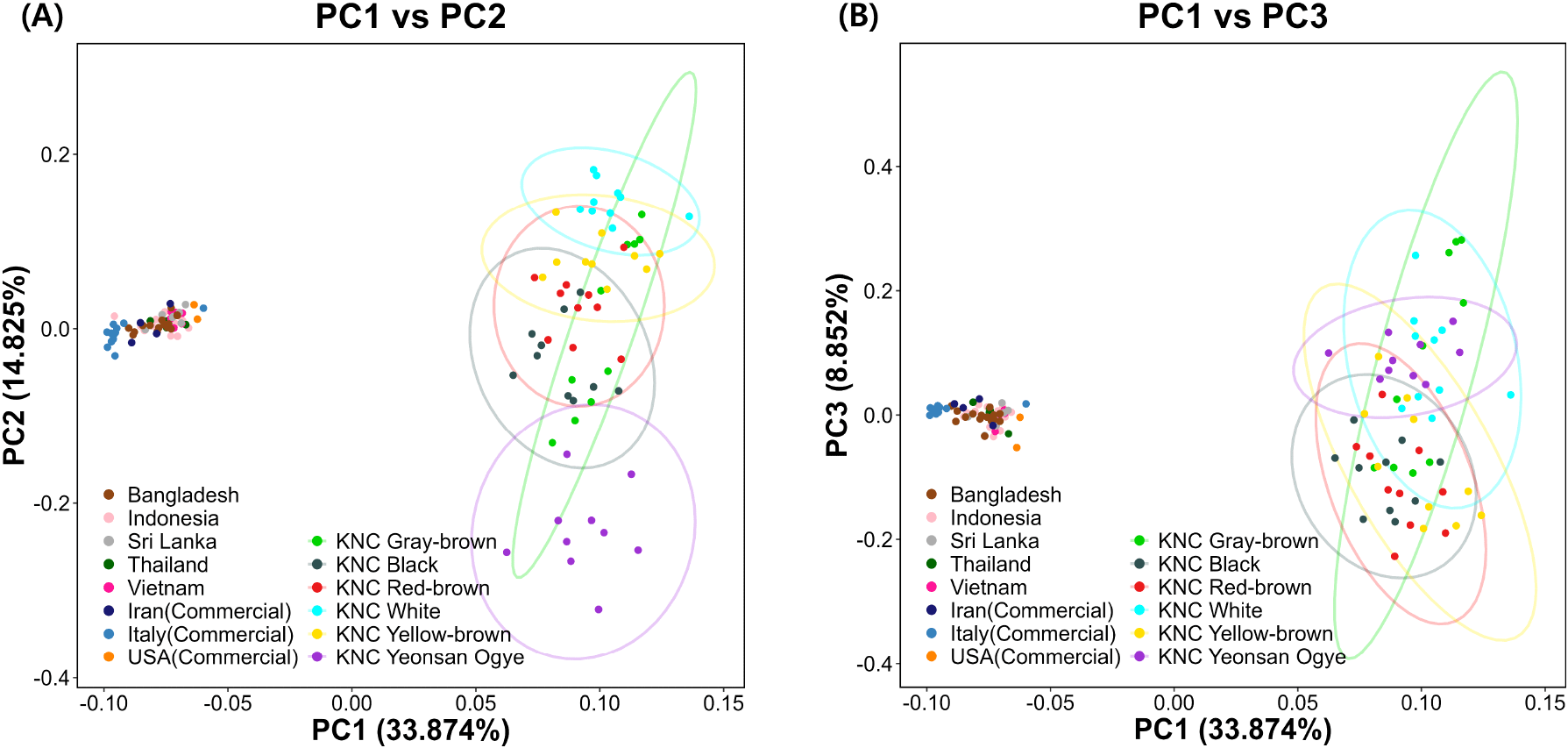
집단 간 유전적 구조 차이를 파악하기 위해 PCA를 수행한 결과, PC1은 33.87%의 변동을 설명하며 가장 큰 비중을 차지하였으며, PC2와 PC3는 각각 14.82%와 8.85%로 확인되었다(Fig. 1). 상위 세 개의 주성분이 전체 변동의 약 57.6%를 설명하여, 이들이 집단 간 유전적 차이를 반영하는 주요 축으로 기능함을 확인하였다. 특히, PC1 축에서 KNC와 외래 집단이 명확하게 분리되었으며, 이는 열내성 연관 유전자 구간에서 두 집단 간 유전적 구조 차이가 있을 가능성을 시사한다. PC2와 PC3 축에서 외래 집단은 하나의 클러스터를 형성하는 것과 달리, KNC는 계통별로 각각의 클러스터를 형성하여 집단 내 높은 유전적 다양성을 보유하고 있음을 시사하였다.
kjps-52-4-309-g1
Fig. 1. PCA results of Korean native chickens, tropical native chickens, and commercial chickens. PCA, principal component analysis; KNC, Korean native chicken.
Download Original Figure
2. FST 분석

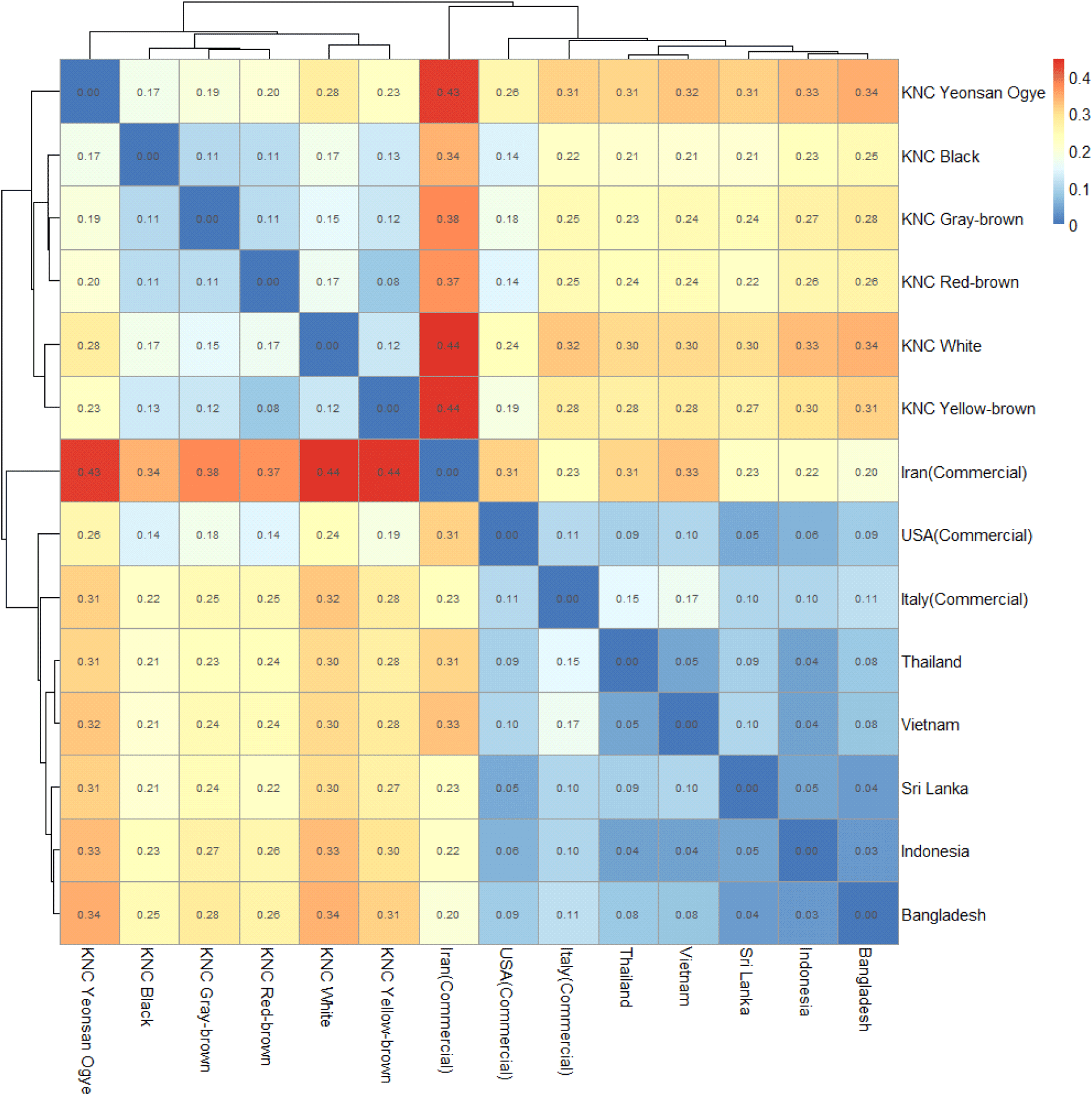
PCA에서 확인된 집단 간 분화 양상을 보다 정량적으로 평가하기 위해 FST 분석을 수행하였다(Fig. 2). 분석 결과, KNC는 열대 지역 재래닭 및 실용계 집단과 비교하여 0.14~ 0.34 범위의 FST 값을 보여, PCA에서 나타난 집단 간의 구분과 일치하는 뚜렷한 유전적 분화를 나타냈다. 이는 KNC가 다른 집단과 구별되는 열내성 연관 유전적 특성을 보유하고 있음을 뒷받침한다.
kjps-52-4-309-g2
Fig. 2. FST heatmap of chicken populations used in this study based on 19 heat tolerance-related genes. KNC, Korean native chicken.
Download Original Figure

KNC 집단 내에서는 연산오계를 제외한 5개 계통에서 0.08~0.17의 낮은 분화도가 관찰되어, KNC 계통 간 높은 유전적 유사성을 보였다. 반면, 연산오계는 다른 KNC 계통과 0.17~0.28 범위의 FST 값을 보여 KNC 집단 내에서도 독립적인 유전적 구조를 가진 계통임을 나타냈다. KNC 계통 간 낮은 분화도는 기존 연구에서도 일관되게 보고되었으며, 초위성체(microsatellite) 마커 분석에서도 여러 KNC 계통이 하나의 근접한 군집으로 분류되는 양상이 확인되었다(Seo et al., 2015). 이러한 군집 구조는 KNC가 제한된 규모의 개체군을 기반으로 복원되어 장기간 유사한 보존·번식 체계로 유지된 관리 체계에 기인하여, 계통별 유전적 분화가 크게 축적되지 않은 것으로 해석된다.

외래 집단 간 비교에서는 이탈리아 및 미국 실용계 집단은 열대 지역 재래닭과의 FST 값이 0.05~0.17 범위로 낮게 나타나 열대 계통과 유전적으로 유사함이 확인되었다. 반면, 이란 실용계 집단은 열대 재래닭과는 0.20~0.33, KNC와는 0.34~0.44의 FST 값을 보여 상대적으로 높은 수준의 유전적 분화도를 보였다. 이는 이란 계통이 외래·열대 집단과 비교하여도 독립적인 유전적 구조를 보유하고 있으며, 특히 KNC와는 뚜렷하게 구분되는 집단임을 시사한다.

3. 계통수 분석

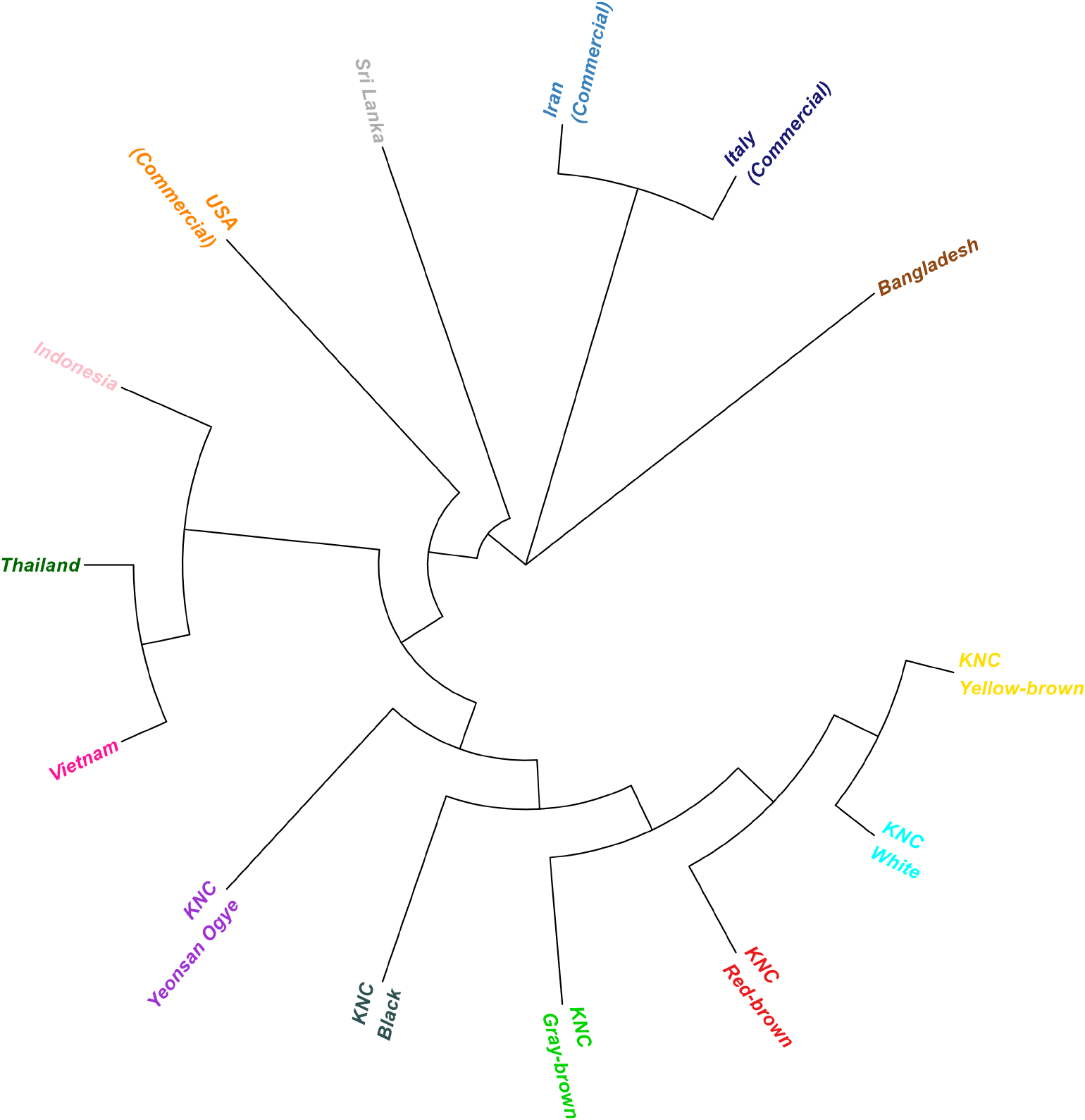
집단 간 유전적 관계를 평가하기 위해 Nei 유전거리를 산출하고, 이를 기반으로 phylogenetic tree를 구성하였다(Fig. 3). 분석 결과, 모든 KNC 집단은 하나의 공통 가지에서 분리되며 집단 간 높은 근연관계를 나타내었으나, 외래 집단과는 서로 명확히 구분되는 가지를 형성하였다. 이는 두 집단 간 뚜렷한 유전적 분화가 존재함을 의미하며, 앞선 FST 분석에서 확인된 집단 간 유전적 차이와도 일관된 결과이다.
kjps-52-4-309-g3
Fig. 3. Phylogenetic tree of chicken populations used in this study based on Nei’s genetic distance. KNC, Korean native chicken.
Download Original Figure

이러한 분리 양상은 집단별 상이한 계통적 기원과 육종 역사를 반영하는 것으로 해석된다. KNC는 1990년대에 복원된 이후 장기간 보존 중심으로 유지되며 선발·개량이 제한적으로 이루어져온 집단이다(Cho et al., 2021). 반면, 실용계 집단은 수십 년간 성장률과 사료효율을 중심으로 강한 인위적 선발이 지속되어 왔으며(Zuidhof et al., 2014), 이러한 개량 과정에서 열내성과 연관된 유전자군도 함께 변화했을 가능성이 크다. 또한 열대 지역 재래닭들은 장기간 고온다습한 환경에서 적응해 온 계통으로(Guo et al., 2022; Rachman et al., 2024), 환경적 선발 압력의 방향이 KNC와 큰 차이가 있다. 이러한 KNC와 외래 집단의 분리 패턴은 단순한 유전적 차이뿐 아니라, 자연적·인위적 선발 압력의 차이, 육종 체계의 차별성, 환경 적응 역사가 복합적으로 작용해 열내성 연관 유전자 구간에서도 집단 간 유전적 분리를 유도했음을 시사한다.

더 나아가, 열내성 반응은 세포 내 신호전달 및 대사 조절뿐만 아니라 면역 및 항원제시 체계에도 영향을 미치는 것으로 보고되어 있다(Monson et al., 2018). 특히 닭의 주조직적합복합체(major histocompatibility complex, MHC)는 질병 저항성과 밀접하게 연관된 대표적인 면역 유전자군으로, 환경 스트레스에 대한 반응에도 중요한 역할을 수행하는 것으로 알려져 있다(Silva and Gallardo, 2020). 이러한 점을 고려하면, 열내성 형질의 생물학적 배경을 해석할 때 대사 및 세포 스트레스 경로뿐 아니라 면역 기반 반응 역시 잠재적인 고려 요소가 될 수 있다. 본 연구에서는 열내성 후보 유전자 영역에 한정된 분석 결과를 제시하였으나, 향후 연구에서 MHC를 포함한 면역 관련 유전자군과 본 연구에서 확인된 유전 변이를 병행하여 평가한다면, 고온 환경에서의 열내성 반응을 보다 다각적으로 이해하는 데 기여할 것으로 기대된다.

적 요

본 연구는 KNC와 외래 집단을 대상으로 열내성과 연관된 19개 유전자 영역 내 존재하는 SNP 변이를 분석하여 집단 간 유전적 구조를 규명하였다. 분석 결과, KNC는 외래 집단과 명확하게 분리되는 구조를 보였으며, 이는 PCA, FST 및 계통수 분석에서 일관되게 확인되었다. 이러한 결과는 KNC가 외래 집단과 구별되는 열내성 관련 유전적 특성을 보유하고 있음을 시사한다. 또한 열내성이 면역 및 항원제시 기전과도 밀접하게 연관된다는 점을 고려하면, 향후 MHC를 포함한 면역 관련 유전자군과의 통합 분석을 통해 KNC의 열내성 메커니즘을 보다 다각적으로 이해할 수 있을 것으로 판단된다. 다만 본 연구는 SNP 기반 후보 유전자 분석으로 표현형 자료가 부재하여, 관찰된 분리 패턴이 실제 열내성 반응에 따른 것인지 혹은 품종 고유의 유전적 구조에 기인한 것인지는 명확히 규명하기에는 제한이 있다. 또한, 전장 유전체 분석이 아닌 후보 유전자 중심의 분석을 수행하였기에, 분석 범위가 제한됨에 따른 선택 편향 가능성을 완전히 배제하기는 어렵다. 그럼에도 본 연구는 KNC의 열내성 유전체 특성을 규명하는 기초자료로서 의의를 가지며, 향후 열내성 개량과 분자마커 기반 선발 전략 수립에 활용될 수 있을 것으로 기대된다.

사 사

본 연구는 한국연구재단 개인기초연구사업(중견연구·창의연구형)의 지원을 받은 연구과제(MHC 유전자의 세포 표면 발현량 분석을 통한 닭의 질병 저항성 계통 육성 기반 조성, 과제번호: RS-2025-16072125)에 의해 수행되었습니다.

REFERENCES

1.

Abdi H, Williams LJ 2010 Principal component analysis. Wiley Interdiscip Rev Comput Stat 2(4):433-459.

2.

Animal and Plant Quarantine Agency 2025. 2024 Annual Report of Slaughtered Chickens by Breed in Korea. Livestock Sanitation Information System, QIA. https://www.qia.go.kr/livestock/clean/viewTcsjWebAction.do?id=214228. Accessed on November. 2025.

3.

Asadollahpour Nanaei H, Kharrati-Koopaee H, Esmailizadeh A 2022 Genetic diversity and signatures of selection for heat tolerance and immune response in Iranian native chickens. BMC Genomics 23(1):224.

4.

Balakrishnan KN, Ramiah SK, Zulkifli I 2023 Heat shock protein response to stress in poultry: a review. Animals 13(2):317.

5.

Chang CC, Chow CC, Tellier LC, Vattikuti S, Purcell SM, Lee JJ 2015 Second-generation PLINK: rising to the challenge of larger and richer datasets. GigaScience 4(1):7.

6.

Cho S, Manjula P, Kim M, Cho E, Lee D, Lee SH, Seo D 2021 Comparison of selection signatures between Korean native and commercial chickens using 600K SNP array data. Genes 12(6):824.

7.

Cingolani P, Platts A, Wang LL, Coon M, Nguyen T, Wang L, Ruden DM 2012 A program for annotating and predicting the effects of single nucleotide polymorphisms, SnpEff: SNPs in the genome of Drosophila melanogaster strain w1118; iso-2; iso-3. Fly 6(2):80-92.

8.

Danecek P, Bonfield JK, Liddle J, Marshall J, Ohan V, Pollard MO, Whitwham A, Keane T, McCarthy SA, Davies RM, Li H 2021 Twelve years of SAMtools and BCFtools. GigaScience 10(2):giab008.

9.

Fleming DS, Koltes JE, Markey AD, Schmidt CJ, Ashwell CM, Rothschild MF, Lamont SJ 2016 Genomic analysis of Ugandan and Rwandan chicken ecotypes using a 600K genotyping array. BMC Genomics 17(1):407.

10.

Galbase. A chicken multi-omics database integrating genomic, transcriptomic, and epigenomic data. http://animal.omics.pro/code/index.php/ChickenVar Accessed on November. 2025.

11.

Guo X, Xing CH, Wei W, Zhang XF, Wei ZY, Ren LL, Jiang RS 2022 Genome-wide scan for selection signatures and genes related to heat tolerance in domestic chickens in the tropical and temperate regions in Asia. Poult Sci 101(7):101821.

12.

Jin S, Jayasena DD, Jo C, Lee JH 2017 The breeding history and commercial development of the Korean native chicken. Worlds Poult Sci J 73(1):163-174.

13.

Jin YH, Ahn SG, Kim SA 2015 BAG3 affects the nucleocytoplasmic shuttling of HSF1 upon heat stress. Biochem Biophys Res Commun 464(2):561-567.

14.

Kawazoe Y, Tanabe M, Sasai N, Nagata K, Nakai A 1999 HSF3 is a major heat shock responsive factor during chicken embryonic development. Eur J Biochem 265(2):688-697.

15.

Kishawy AT, Ibrahim D, Roushdy EM, Moustafa A, Eldemery F, Hussein EM, Zaglool AW 2023 Impact of resveratrol-loaded liposomal nanocarriers on heat-stressed broiler chickens: Effects on performance, sirtuin expression, oxidative stress regulators, and muscle building factors. Front Vet Sci 10:1137896.

16.

Lee SY, Park JY, Hyun JM, Jung S, Jo C, Nam KC 2018 Comparative analysis of meat quality traits of new strains of native chickens for Samgyetang. Korean J Poult Sci 45(3):175-182.

17.

Luo QB, Song XY, Ji CL, Zhang XQ, Zhang DX 2014 Exploring the molecular mechanism of acute heat stress exposure in broiler chickens using gene expression profiling. Gene 546(2):200-205.

18.

Meirmans PG, Hedrick PW 2011 Assessing population structure: FST and related measures. Mol Ecol Resour 11(1):5-18.

19.

Monson MS, Van Goor AG, Ashwell CM, Persia ME, Rothschild MF, Schmidt CJ, Lamont SJ 2018 Immunomodulatory effects of heat stress and lipopolysaccharide on the bursal transcriptome in two distinct chicken lines. BMC Genomics 19(1):643.

20.

NABIC (National Agricultural Biotechnology Information Center) National Agricultural Biotechnology Information Center. Rural Development Administration. https://nabic.rda.go.kr/. Accessed on November. 2025.

21.

Nei M 1972 Genetic distance between populations. Am Nat 106(949):283-292.

22.

Pritchett EM, Van Goor A, Schneider BK, Young M, Lamont SJ, Schmidt CJ 2023 Chicken pituitary transcriptomic responses to acute heat stress. Mol Biol Rep 50(6):5233-5246.

23.

R Core Team 2025 R: A Language and Environment for Statistical Computing. R Foundation for Statistical Computing, Vienna, Austria.

24.

Rachman MP, Bamidele O, Dessie T, Smith J, Hanotte O, Gheyas AA 2024 Genomic analysis of Nigerian indigenous chickens reveals their genetic diversity and adaptation to heat-stress. Sci Rep 14(1):2209.

25.

Saitou N, Nei M 1987 The neighbor-joining method: a new method for reconstructing phylogenetic trees. Mol Biol Evol 4(4):406-425.

26.

Seo JH, Oh J, Lee J, Seo D, Kong HS 2015 Studies on genetic diversity and phylogenetic relationships of Korean native chicken using the microsatellite marker. Korean J Poult Sci 42(1):15-26.

27.

Silva APD, Gallardo RA 2020 The chicken MHC: insights into genetic resistance, immunity, and inflammation following infectious bronchitis virus infections. Vaccines 8(4):637.

28.

Walugembe M, Bertolini F, Dematawewa CMB, Reis MP, Elbeltagy AR, Schmidt CJ, Rothschild MF 2019 Detection of selection signatures among Brazilian, Sri Lankan, and Egyptian chicken populations under different environmental conditions. Front Genet 9:737.

29.

Wang SH, Cheng CY, Tang PC, Chen CF, Chen HH, Lee YP, Huang SY 2013 Differential gene expressions in testes of L2 strain Taiwan country chicken in response to acute heat stress. Theriogenology 79(2):374-382.

30.

Wang SH, Cheng CY, Tang PC, Chen CF, Chen HH, Lee YP, Huang SY 2015 Acute heat stress induces differential gene expressions in the testes of a broiler-type strain of Taiwan country chickens. PLOS ONE 10(5):e0125816.

31.

Weir BS, Cockerham CC 1984 Estimating F-statistics for the analysis of population structure. Evolution 38(6):1358-1370.

32.

Yan J, Bao E, Yu J 2009 Heat shock protein 60 expression in heart, liver and kidney of broilers exposed to high temperature. Res Vet Sci 86(3):533-538.

33.

Yao M, Wang B, Li Z, Wu S, Zhao B, Sun N, Huang T 2025 Semethylselenocysteine inhibits inflammatory response in an LPS-stimulated chicken HD11 macrophage-like cell model through the NFKB2 pathway. Front Vet Sci 11:1503436.

34.

Zheng X 2013 A Tutorial for the R Package SNPRelate. University of Washington, Washington, USA.

35.

Zhuang ZX, Chen SE, Chen CF, Lin EC, Huang SY 2020 Genomic regions and pathways associated with thermotolerance in layer-type strain Taiwan indigenous chickens. J Therm Biol 88:102486.

36.

Zuidhof MJ, Schneider BL, Carney VL, Korver DR, Robinson FE 2014 Growth, efficiency, and yield of commercial broilers from 1957, 1978, and 2005. Poult Sci 93(12):2970-2982.