Introduction
Adipose tissue plays important roles in energy storage and metabolic regulation, functioning not only as an energy reservoir but also as an endocrine organ involved in whole-body metabolism [1–3]. In poultry, excessive fat accumulation, particularly abdominal fat, reduces feed efficiency and carcass value, whereas moderate intramuscular fat (IMF) contributes positively to meat quality [4]. Understanding the mechanisms controlling adipose tissue development and lipid accumulation is therefore important for improving poultry production.
Adipogenesis refers to the commitment and differentiation of adipocyte precursors into mature adipocytes and is regulated by coordinated transcriptional and signaling networks. Peroxisome proliferator-activated receptor gamma (PPARγ) and CCAAT/enhancer-binding proteins (C/EBPs) constitute the core transcriptional machinery, while insulin/insulin-like growth factor (IGF), Wnt/β-catenin, AMP-activated protein kinase (AMPK), and mechanistic target of rapamycin (mTOR) signaling modulate adipocyte differentiation in response to metabolic and hormonal signals [1,5,6]. Epigenetic mechanisms and non-coding RNAs provide additional regulatory layers [7,8].
Importantly, adipogenesis and fat deposition are closely related but distinct processes. Adipogenesis describes the formation of new adipocytes, whereas tissue-level fat deposition additionally depends on adipocyte hypertrophy, lipid uptake and storage, and systemic lipid supply [6,9]. This distinction is particularly relevant in chickens because, unlike mammals, de novo fatty acid synthesis occurs predominantly in the liver, and hepatically synthesized lipids are transported to peripheral tissues through very low-density lipoproteins (VLDL) [10–12]. Thus, chicken adipose tissue development must be considered within the broader context of liver-centered lipid metabolism and inter-organ metabolic communication.
Adipogenesis and fat deposition are further influenced by environmental and nutritional conditions. Heat and cold stress alter energy partitioning, mitochondrial function, and redox balance, whereas dietary nutrients and bioactive compounds can modify lipid metabolism and adipogenic regulation [4,13,14]. In parallel, advances in genome-wide association studies, transcriptomics, single-cell analysis, and multi-omics approaches have improved the identification of genetic and regulatory networks underlying fat deposition in chickens [15,16].
Despite these advances, the integration of adipocyte-intrinsic regulation with liver-centered lipid metabolism, environmental responsiveness, and production traits remains incomplete. This review focuses on the molecular regulation of adipogenesis and adipose lipid metabolism in chickens. Because most available mechanistic studies have been conducted in broilers, broiler-derived preadipocytes, or abdominal adipose tissue, these experimental systems constitute the major evidence base discussed herein. Where relevant, differences associated with genotype, age, sex, and physiological state are considered; however, reproductive lipid metabolism in laying hens, which is strongly influenced by hepatic lipogenesis and lipid transport for egg production, is beyond the primary scope of this review. Relevant literature was primarily identified through PubMed searches using combinations of keywords such as “chicken,” “adipogenesis,” “adipocyte differentiation,” “adipose tissue,” “lipid metabolism,” and related molecular regulators and signaling pathways. Literature available up to 2026 was considered, with emphasis on recent studies and earlier key studies where relevant. Chicken-specific studies were prioritized, while selected mammalian studies were included to provide mechanistic context when direct evidence in chickens was limited.
Characteristics of adipose tissue in chickens
In chickens, adipose tissue is distributed across several anatomical depots, including abdominal fat, subcutaneous fat, and IMF, each exhibiting distinct physiological roles and meta-bolic characteristics [6,16]. Among these, abdominal fat represents a major adipose depot and is commonly used as an indicator of excessive fat accumulation because of its close relation-ship with economically important traits, including feed efficiency and carcass composition [17,18]. Consequently, abdominal fat deposition has been an important target of genetic selection aimed at reducing excessive fatness and improving production efficiency in broilers.
Subcutaneous fat is relatively less developed in chickens than in mammals, reflecting species-specific differences in lipid storage and distribution [12]. In contrast, intramuscular fat, although quantitatively minor relative to major adipose depots, plays an important role in meat quality by contributing to tenderness, juiciness, and flavor. Therefore, IMF deposition has received increasing attention because of its relevance to meat quality despite its relatively small contribution to total body lipid stores [4]. Importantly, adipose depots differ not only in anatomical distribution but also in cellular characteristics, metabolic activity, developmental regulation, and responsiveness to nutritional and physiological stimuli [6,9]. Such depot-specific heterogeneity highlights the complexity of adipose tissue regulation in chickens and underscores the importance of considering anatomical location when investigating adipogenesis and fat deposition.
Adipose tissue biology in chickens differs substantially from that in mammals, particularly with respect to the sites of lipid synthesis and mechanisms of lipid transport. In mammals, adipose tissue represents an important site of de novo lipogenesis, whereas in birds, the liver is the predominant site of fatty acid synthesis [6,10–12]. Consequently, a large proportion of triglycerides deposited in chicken adipose tissue originates from hepatic lipid synthesis. Hepatically synthesized triglycerides are incorporated into VLDL, secreted into the circulation, and subsequently taken up by peripheral tissues, including adipose tissue [6,12]. This liver-centered lipid metabolism has important implications for adipose tissue development in chickens. Compared with mammalian adipocytes, chicken adipocytes make a relatively limited contribution to de novo fatty acid synthesis and rely more heavily on circulating triglyceride-rich lipoproteins derived from hepatic synthesis or dietary lipids for lipid storage [6,12]. Thus, adipose tissue expansion in chickens is closely associated with hepatic lipogenesis, VLDL secretion, and peripheral uptake of circulating lipids. Physiological state should also be considered when interpreting lipid metabolism in chickens. In laying hens, hepatic lipogenesis and lipoprotein production are markedly enhanced to support the synthesis and transport of yolk lipid precursors during egg production. Consequently, lipid partitioning in reproductively active laying hens differs substantially from that in growing broilers, and findings obtained from broiler adipose tissue or broiler-derived adipocytes should not necessarily be extrapolated directly to laying hens. The endocrine characteristics of avian adipose tissue also differ from those of mammalian adipose tissue. In mammals, leptin is predominantly produced by adipocytes and functions as a major endocrine signal linking adipose stores to the regulation of energy balance. In chickens, however, leptin expression in adipose tissue is relatively low, and its expression pattern suggests that avian leptin may function predominantly through autocrine or paracrine rather than classical adipose-derived endocrine mechanisms [19]. Another important difference between avian and mammalian adipose metabolism involves insulin responsiveness and glucose transport. Chickens lack the canonical mammalian insulin-responsive glucose transporter GLUT4 [20], and insulin regulation of glucose uptake in chicken adipose tissue differs from that in mammals. Nevertheless, insulin can stimulate glucose uptake in cultured chicken adipocytes through AKT-dependent translocation of GLUT1 to the plasma membrane [21]. These differences highlight the distinct metabolic and endocrine characteristics of avian adipose tissue and should be considered when extrapolating mechanisms of mammalian adipose biology to chickens.
Adipose tissue development in chickens is a dynamic process involving both adipocyte hyperplasia and hypertrophy. Hyperplasia results from the proliferation and differentiation of adipocyte precursor cells, whereas hypertrophy reflects increased lipid accumulation and enlargement of existing adipocytes [9,22,23]. During early post-hatch development, adipocyte hyperplasia contributes substantially to abdominal adipose tissue expansion, whereas hypertrophic growth becomes increasingly important as birds mature. However, the relative contributions of hyperplasia and hypertrophy vary with age, genotype, nutritional status, and other physiological and environmental factors [9,22,23]. Studies of abdominal adipose tissue cellularity provide direct evidence for these developmental changes. In broiler-type chickens, both adipocyte number and size increase during early growth, whereas later increases in adipose mass are increasingly attributable to enlargement of existing adipocytes [22]. Consistent with this pattern, divergent selection for abdominal fatness produces marked differences in adipose tissue cellularity; chickens selected for high fatness exhibit increases in both adipocyte number and adipocyte size compared with lean lines [23]. These observations indicate that developmental regulation of both adipocyte recruitment and lipid filling contributes to variation in fat deposition among chickens.
Recent transcriptomic and single-cell approaches have further revealed substantial cellular and molecular heterogeneity within chicken adipose tissue. Single-cell RNA sequencing has identified distinct cell populations and adipogenic states associated with differential fat deposition, indicating that adipose tissue development involves heterogeneous precursor and adipocyte populations rather than a uniform cellular process [24]. Together, these findings demonstrate that chicken adipose tissue development is governed by coordinated changes in adipocyte number, cell size, and cellular composition across developmental stages.
Cellular and molecular mechanisms of adipogenesis
Adipogenesis is a highly regulated, multistep process through which mesenchymal stem cells (MSCs) commit to the adipocyte lineage and subsequently differentiate into mature lipid-laden adipocytes (Fig. 1). This process can be broadly divided into determination, early differentiation, and terminal differentiation [25,26]. During the determination phase, multipotent precursor cells become committed to the preadipocyte lineage while retaining pro-liferative capacity and responsiveness to adipogenic stimuli. In classical mammalian models, during early differentiation, growth-arrested preadipocytes re-enter the cell cycle and undergo mitotic clonal expansion (MCE), accompanied by sequential activation of adipogenic transcription factors. Terminal differentiation is subsequently characterized by progressive lipid accumulation and increased expression of adipocyte-associated genes, including fatty acid-binding proteins (FABPs) and lipoprotein lipase (LPL) [26,27]. Although much of this sequential model was initially established in mammalian adipocyte systems, studies using chicken preadipocytes have demonstrated that conserved transcriptional regulators, particularly PPARγ and C/EBP family members, also play critical roles in avian adipocyte differentiation [6,28]. However, direct experimental evidence demonstrating that MCE is an obligatory or characteristic step during chicken preadipocyte differentiation remains limited. Therefore, this sequential model, although useful for describing the general framework of adipogenesis, should not be directly extrapolated to chickens without further experimental validation.
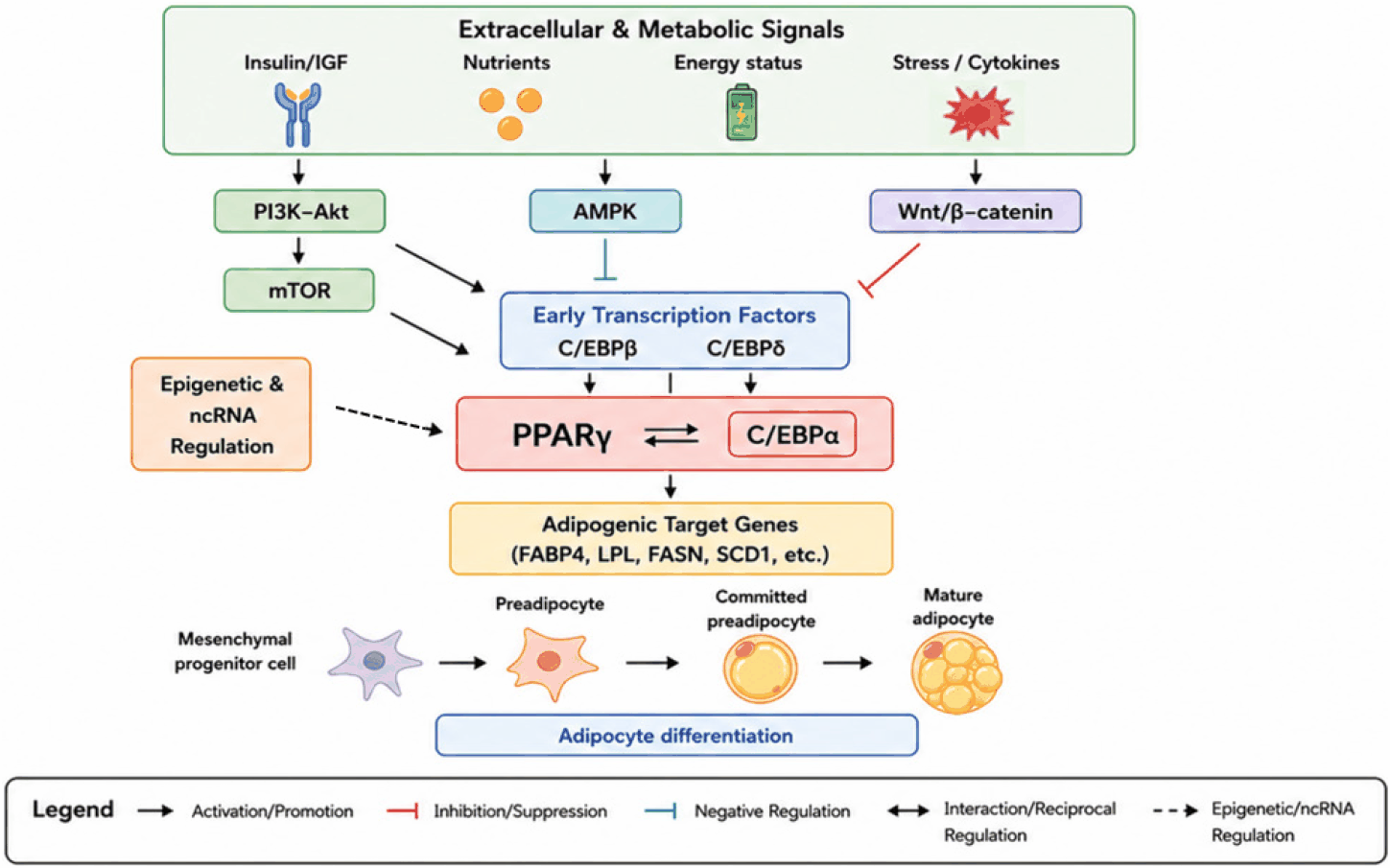
The transcriptional regulation of adipogenesis is orchestrated by a hierarchical network of transcription factors, among which PPARγ and C/EBPs serve as major regulators [1,6,25] (Fig. 1). PPARγ is a central driver of the adipogenic program and promotes the expression of numerous genes required for lipid uptake, storage, and maintenance of the differentiated adipocyte phenotype. Importantly, suppression of PPARγ expression in chicken preadipocytes markedly inhibits adipocyte differentiation, demonstrating its conserved role in avian adipogenesis [28].
C/EBP family members cooperate closely with PPARγ during adipocyte differentiation. C/EBPβ and C/EBPδ are induced during the early stages of differentiation and promote the sub-sequent expression of PPARγ and C/EBPα. PPARγ and C/EBPα then cooperatively activate adipocyte-specific genes and contribute to maintenance of the differentiated state [1,25]. Sterol regulatory element-binding protein 1 (SREBP-1) also contributes to adipogenesis by stimulating lipogenic gene expression and enhancing PPARγ-dependent transcriptional activity [29]. The adipogenic activities of PPARγ, C/EBPα, and SREBP-1 have also been demonstrated in chicken cells, indicating substantial conservation of the core adipogenic transcriptional machinery between birds and mammals [30]. In contrast, several factors act as negative regulators of adipogenesis. Preadipocyte factor-1 (Pref-1), also known as delta-like non-canonical Notch ligand 1 (DLK1), is highly expressed in preadipocytes and decreases during differentiation. Pref-1 inhibits major adipogenic transcription factors, including PPARγ and C/EBPα, thereby maintaining the undifferentiated state and suppressing adipocyte differentiation [31]. Thus, adipocyte differentiation depends on the coordinated balance between positive and negative transcriptional regulators.
Adipogenesis is therefore not governed by a single regulatory mechanism but results from the coordinated integration of transcriptional, epigenetic, and post-transcriptional processes. At the core of this network, PPARγ and C/EBP family members establish and maintain the adipogenic transcriptional program, whereas SREBP-1 facilitates the coordination of adipocyte differentiation with lipid synthesis [25–27]. Epigenetic modifications and non-coding RNAs provide additional regulatory layers that modulate the timing and magnitude of adipogenic gene expression [6,32]. Recent transcriptomic, epigenomic, and single-cell approaches have further demonstrated that adipose tissue consists of heterogeneous cell populations with distinct molecular characteristics and adipogenic potential. In chickens, single-cell transcriptomic analysis has identified cellular heterogeneity associated with differential fat deposition, providing new insights into the molecular complexity of avian adipose tissue [24]. Together, these findings support a systems-level view in which chicken adipogenesis emerges from interactions among cellular differentiation programs, transcriptional regulation, chromatin organization, and post-transcriptional control. These adipocyte-intrinsic mechanisms are further regulated by extracellular hormonal, nutritional, and metabolic signals through multiple intracellular signaling pathways, as discussed below.
Signaling pathways regulating adipogenesis
Adipocyte differentiation is controlled by multiple intracellular signaling pathways that integrate hormonal, nutritional, and cellular energy signals (Fig. 1). These pathways ultimately converge on adipogenic transcription factors, particularly PPARγ and C/EBPs, thereby determining whether precursor cells remain undifferentiated or progress toward mature adipocytes. In chickens, these signaling networks operate within a distinct metabolic context characterized by liver-centered lipogenesis and substantial dependence of adipose tissue on circulating lipids [6,9]. Understanding how these pathways interact is therefore important for elucidating the mechanisms underlying fat deposition in chickens. Multiple signaling path-ways participate in the regulation of chicken adipogenesis. This section focuses on insulin/IGF, Wnt/β-catenin, AMPK, and mTOR signaling because these pathways have been extensively implicated in adipogenic regulation and metabolic control, with supporting evidence available in chicken experimental models. Other pathways, including MAPK-related signaling, also contribute to chicken adipocyte differentiation and interact with these major regulatory networks.
Insulin and IGF signaling provides an important link between nutrient availability and adipocyte differentiation. Binding of insulin or IGF to their respective receptors activates insulin receptor substrate proteins and the phosphoinositide 3-kinase (PI3K)–Akt signaling cascade, which regulates glucose utilization, lipid synthesis, and cellular processes required for adipocyte differentiation [2,33,34]. Activation of Akt promotes adipogenic gene expression and supports the activity of PPARγ and C/EBPα, thereby facilitating progression of the adipogenic program. Insulin signaling also promotes lipid accumulation by stimulating glucose uptake and lipogenic processes, including the expression and activity of enzymes involved in fatty acid and triglyceride synthesis. However, insulin signaling and glucose transport in chicken adipose tissue differ from the canonical mammalian paradigm. Chickens lack the GLUT4 ortholog that mediates insulin-stimulated glucose uptake in mammalian adipocytes [20]. Nevertheless, insulin has been shown to acutely increase glucose uptake and plasma membrane GLUT1 abundance in primary chicken adipocytes through an AKT-dependent mechanism [21]. Thus, although components of insulin signaling are conserved, the mechanisms linking insulin signaling to glucose transport in chicken adipocytes should not be directly extrapolated from the mammalian GLUT4-dependent model. The adipogenic responses of avian cells to insulin and IGF signaling do not necessarily parallel those observed in mammalian adipocytes. In cultured chicken preadipocytes, insulin can promote aspects of adipogenic differentiation, whereas responses to IGF-1 and other hormones vary depending on experimental conditions [9,35].
These findings indicate that insulin-mediated signaling provides an important interface between nutritional status and adipose tissue development in chickens, although its physiological effects should be interpreted within the species-specific metabolic characteristics of birds.
The canonical Wnt/β-catenin pathway is a major negative regulator of adipogenesis. Activation of Wnt signaling stabilizes cytoplasmic β-catenin, allowing its translocation to the nucleus, where it promotes transcriptional programs that maintain precursor cells in an un-differentiated state. A major consequence of this signaling is suppression of PPARγ and C/EBPα expression, thereby preventing activation of the adipogenic transcriptional program [5,36]. Conversely, attenuation of Wnt/β-catenin signaling permits induction of adipogenic transcription factors and facilitates adipocyte differentiation. Wnt signaling can therefore function as a molecular switch influencing the balance between adipogenic and alternative mesenchymal cell fates. In chickens, Wnt-related signaling has been implicated in the regulation of adipogenesis and differential fat deposition, suggesting that this pathway contributes to variation in adipose development and body composition [6,9,16].
AMP-activated protein kinase (AMPK) is a central cellular energy sensor that coordinates metabolic responses to changes in cellular energy status. AMPK is activated when cellular energy availability declines and functions to restore energy balance by suppressing ATP-consuming anabolic pathways while promoting energy-producing catabolic processes [37]. Activation of AMPK generally opposes adipogenesis and lipid accumulation by suppressing adipogenic transcriptional programs and inhibiting lipogenic metabolism [37–40]. Pharma-cological activation of AMPK inhibits adipocyte differentiation and reduces the expression of PPARγ, C/EBPα, fatty acid synthase (FASN), and acetyl-CoA carboxylase (ACC) in adipocyte models [38]. AMPK also phosphorylates and inhibits ACC, reducing malonyl-CoA availability and thereby relieving inhibition of carnitine palmitoyltransferase-1 (CPT1), which favors mitochondrial fatty acid oxidation.
Evidence from chicken adipocytes further supports the importance of the AMPK–ACC axis in avian lipid metabolism. Adiponectin-mediated activation of AMPK/ACC2 signaling has been associated with improved mitochondrial function and altered lipid metabolism in chicken adipocytes [41]. Thus, AMPK represents an important molecular link between cellular energy status, adipogenesis, and lipid utilization in chickens.
The mTOR pathway is another major nutrient-sensing system involved in the regulation of cell growth, protein synthesis, and lipid metabolism. mTOR operates through two functionally distinct complexes, mTOR complex 1 (mTORC1) and mTOR complex 2 (mTORC2). mTORC1 responds primarily to nutrients, growth factors, and cellular energy status and promotes anabolic processes, whereas mTORC2 contributes to Akt signaling and metabolic regulation [42]. mTOR signaling contributes to adipogenesis by coordinating nutrient availability with adipogenic transcription and lipogenic metabolism [42–44]. mTORC1 stimulates lipid biosynthesis in part through activation of SREBP-1, whereas mTORC2 supports insulin–Akt signaling required for normal metabolic responses. Consequently, inhibition or disruption of mTOR signaling can interfere with adipocyte differenttiation and lipid accumulation.
Evidence from chicken preadipocytes indicates that mTOR signaling also contributes to avi-an adipogenesis. Adiponectin has been shown to inhibit chicken preadipocyte differentiation through pathways involving p38 MAPK/ATF-2 and mTOR/p70 S6 kinase signaling, providing direct evidence linking the mTOR pathway to regulation of adipocyte differentiation in chickens [45]. MAPK signaling also contributes to the regulation of chicken adipocyte differentiation. In cultured chicken preadipocytes, adiponectin activated the p38 MAPK/ATF-2 pathway while inhibiting adipogenic differentiation and lipid accumulation. Pharmacological inhibition of p38 MAPK attenuated these effects, providing direct evidence for the involvement of p38 MAPK/ATF-2 signaling in chicken adipogenesis [45]. Together, these findings indicate crosstalk between MAPK and mTOR-related signaling and support a role for mTOR signaling in nutrient- and hormone-responsive regulation of chicken adipocyte differentiation.
Hormonal signals regulate adipogenesis through interactions with intracellular signaling and transcriptional networks, particularly those converging on PPARγ and C/EBP family members [2,25]. Glucocorticoids are well-established components of adipogenic differentiation systems and can facilitate induction of adipogenic transcription factors, whereas insulin provides both metabolic and differentiation-related signals. Thyroid hormones regulate systemic energy expenditure and lipid metabolism, although their direct adipogenic effects vary among species and experimental conditions [2]. Hormonal regulation of chicken adipogenesis exhibits several species-specific characteristics [9,35]. Studies using primary chicken preadipocytes have demonstrated that dexamethasone stimulates aspects of adipocyte differentiation, whereas responses to insulin, IGF-1, and thyroid hormone vary depending on culture and nutritional conditions [35]. These observations emphasize the need for caution when directly extrapolating mammalian endocrine models of adipogenesis to poultry.
Corticosterone, the major glucocorticoid in birds, is particularly relevant to the regulation of lipid metabolism under physiological and environmental stress. In broiler chickens, corti-costerone alters the expression of genes involved in lipid uptake, synthesis, and mobilization in white adipose tissue and primary adipocytes, indicating that glucocorticoid signaling can directly modify avian adipose metabolism [46]. Such hormonal effects may contribute to changes in fat deposition associated with nutritional imbalance and environmental stress.
Adipogenesis is ultimately determined by extensive crosstalk among nutrient-sensing, hormonal, and energy-sensing pathways rather than by the independent action of individual signaling systems. Insulin/PI3K–Akt signaling can stimulate mTOR activity and promote anabolic metabolism, whereas AMPK activation generally suppresses mTORC1-dependent anabolic processes during cellular energy deficiency [33,37,42]. Wnt/β-catenin signaling antagonizes adipogenic differentiation by maintaining suppression of PPARγ and C/EBPα, thereby counteracting pro-adipogenic signals [5,36]. The balance among these pathways determines how adipocyte precursors respond to changes in nutrient availability, hormonal status, and cellular energy demand. In chickens, this signaling network is particularly relevant because adipose tissue development occurs within a metabolic system in which the liver is the pre-dominant site of de novo fatty acid synthesis. Consequently, adipocyte-intrinsic signaling must be considered together with hepatic lipogenesis, circulating lipoprotein availability, endocrine signals, and environmental conditions when interpreting mechanisms of fat deposition in poultry [6,9].
The principal chicken-specific molecular regulators and signaling pathways discussed in this section are summarized in Table 1, with emphasis on the experimental model, major bio-logical effect, and level of functional evidence.
| Regulator/pathway | Chicken model | Primary effect | Major finding | Evidence | Ref. |
|---|---|---|---|---|---|
| PPARγ | Chicken preadipocytes | Promotes differentiation | PPARγ suppression markedly inhibited adipocyte differentiation. | Direct functional | [28] |
| PPARγ/C/EBPα/SREBP-1 | Chicken fibroblasts | Promotes adipocyte-like differentiation | Adipogenic transcription factors induced adipocyte-like conversion and adipogenic gene expression. | Direct functional | [30] |
| Hormonal regulation | Primary chicken preadipocytes | Context-dependent | Responses to insulin, IGF-1, glucocorticoid, and thyroid-related signals varied with experimental conditions. | Direct cellular | [35] |
| Adiponectin-AMPK/ACC2 | Chicken adipocytes | Modulates lipid metabolism | Adiponectin activated AMPK/ACC2-related signaling and altered mitochondrial/lipid metabolism. | Direct cellular | [41] |
| Adiponectin-p38 MAPK/ATF-2-mTOR/p70S6K | Chicken preadipocytes | Inhibits differentiation | Adiponectin inhibited differentiation and lipid accumulation through p38 MAPK/ATF-2 and mTOR/p70S6K-related signaling. | Direct functional | [45] |
| Corticosterone | Broiler WAT/primary adipocytes | Modulates lipid metabolism | Altered expression of genes involved in lipid uptake, synthesis, and mobilization. | In vivo + cellular | [46] |
| gga-miR-106-5p-KLF15 | Chicken preadipocytes | Inhibits differentiation | gga-miR-106-5p inhibited adipogenesis by targeting KLF15. | Direct functional | [52] |
PPARγ, peroxisome proliferator-activated receptor gamma; C/EBP, CCAAT/enhancer-binding protein; SREBP-1, sterol regulatory element-binding protein 1; IGF, insulin-like growth factor; AMPK, AMP-activated protein kinase; ACC2, acetyl-CoA carboxylase 2; mTOR, mechanistic target of rapamycin; WAT, white adipose tissue.
Epigenetic, epitranscriptomic, and post-transcriptional regulation
Adipogenesis is regulated not only by transcription factors and intracellular signaling path-ways but also by epigenetic and post-transcriptional mechanisms that modulate gene expression without altering the underlying DNA sequence. Much of the mechanistic framework for DNA methylation, histone modification, and non-coding RNA regulation was first established in mammalian adipocyte models [7,32]. Increasing chicken-specific evidence now indicates that regulatory chromatin and non-coding RNAs also contribute to avian adipocyte differentiation and fat deposition [6,8].
In mammalian adipocyte models, DNA methylation and histone modifications alter chromatin accessibility and thereby influence the expression of genes required for adipocyte differentiation [32,47]. DNA methylation, particularly at CpG-rich regulatory regions, is generally associated with transcriptional repression, whereas histone acetylation and methylation can alter the accessibility of adipogenic loci to transcription factors. These mechanisms provide a conceptual framework for understanding how developmental and environmental signals may modify adipogenic potential. Chicken-specific genomic studies are beginning to define comparable regulatory architecture in avian adipose tissue. Genome-wide characterization of super-enhancers in chicken adipose tissue identified regulatory regions associated with genes involved in adipogenesis and lipid metabolism, suggesting that super-enhancer organization contributes to adipocyte identity and depot-specific gene expression [8]. Recent chicken-specific studies using integrated ATAC-seq and transcriptomic analyses have further revealed dynamic changes in chromatin accessibility during abdominal adipose development and preadipocyte differentiation [48,49]. These studies identified regulatory regions and transcription factors associated with adipogenic and metabolic pathways, including PPAR, FoxO, TGF-β, and p53 signaling [48,49]. Such findings expand the regulatory framework of chicken adipogenesis beyond the major signaling pathways discussed above, although many of these chromatin-based regulatory relationships remain to be functionally validated. Thus, avian adipogenic regulation extends beyond individual transcription factors to broader chromatin-level regulatory networks.
MicroRNAs (miRNAs) are small non-coding RNAs that regulate gene expression post-transcriptionally through sequence-specific interactions with target mRNAs, resulting in mRNA degradation or translational repression. Their roles in adipocyte differentiation were initially characterized extensively in mammalian systems, where miRNAs regulate transcription factors, signaling molecules, and metabolic genes involved in adipogenesis [7].
In chickens, high-throughput transcriptomic analyses have revealed dynamic changes in miRNA expression during abdominal preadipocyte differentiation [50–52]. Functional evidence further indicates that specific chicken miRNAs can regulate adipogenesis; for example, gga-miR-106-5p inhibits adipogenic differentiation by targeting KLF15 [52]. These findings support a direct role for miRNAs in fine-tuning avian adipocyte differentiation rather than merely reflecting changes associated with fat deposition. Long non-coding RNAs (lncRNAs) can regulate gene expression through chromatin-associated mechanisms, transcriptional control, and interactions with miRNAs as competing endogenous RNAs (ceRNAs). In chicken abdominal preadipocytes, transcriptomic analyses have identified lncRNA networks associated with adipogenic differentiation and lipid metabolism [53]. Whole-transcriptome analyses of chicken fat deposition have also identified integrated lncRNA-miRNA-mRNA and circRNA-miRNA-mRNA regulatory networks, supporting coordinated post-transcriptional control across multiple RNA classes [54]. Circular RNAs (circRNAs) have likewise emerged as regulators of chicken adipogenesis. Transcriptomic analysis of chicken abdominal preadipocytes during differentiation identified numerous candidate circRNAs, including differentially expressed circRNAs associated with lipid-related pathways such as mTOR signaling. Regulatory network analyses further suggested that specific circRNAs may function through ceRNA interactions during chicken adipogenic differentiation [55].
Recent evidence further indicates that epitranscriptomic regulation contributes to chicken adipogenesis. Integrated MeRIP-seq and RNA-seq analyses identified an m6A-dependent mechanism involving the demethylase ALKBH5 and lecithin-cholesterol acyltransferase (LCAT). ALKBH5-mediated demethylation altered LCAT mRNA stability, whereas functional manipulation of LCAT showed that it inhibited chicken preadipocyte proliferation and promoted adipogenic differentiation. These findings provide chicken-specific evidence that m6A RNA modification represents an additional post-transcriptional layer regulating adipogenesis [56].
Epigenetic and post-transcriptional mechanisms interact rather than functioning independently. Chromatin modifications can influence the transcription of non-coding RNAs, whereas miRNAs and other regulatory RNAs can target transcription factors, signaling components, and epigenetic regulators. This reciprocal regulation provides temporal and cell-state-specific control of adipogenic gene expression [6,32]. In chickens, emerging epigenomic and transcriptomic studies demonstrate that chromatin architecture and non-coding RNA networks are associated with adipocyte differentiation and tissue-level fat deposition [8,52,53,55]. However, many candidate regulatory elements remain supported primarily by association-based omics data. Functional validation will therefore be essential to distinguish regulators that directly control adipogenesis from molecular signatures that accompany lipid accumulation.
Interaction with metabolic organs
Adipogenesis and fat deposition in chickens cannot be understood solely as adipocyte-intrinsic processes. They are strongly influenced by metabolic interactions among the liver, adipose tissue, and skeletal muscle (Fig. 2). Unlike mammals, chickens exhibit a liver-centered lipid metabolic system in which the liver is the predominant site of de novo fatty acid synthesis [6,12]. Consequently, inter-organ communication plays a central role in coordinating lipid synthesis, transport, storage, and utilization.
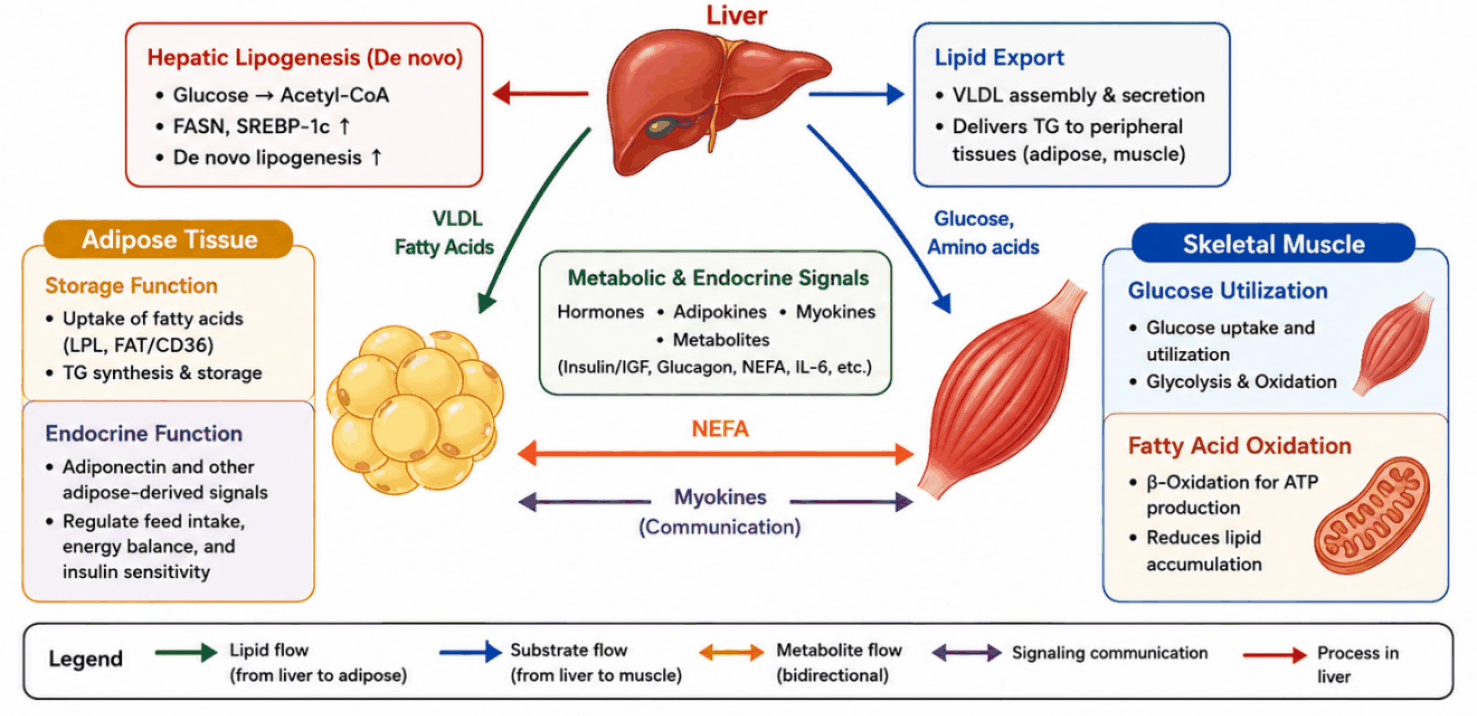
The liver–adipose axis is particularly important in chickens because the liver serves as the primary site of de novo lipogenesis. Dietary carbohydrates in excess of immediate energy requirements can be converted into fatty acids in the liver and subsequently esterified into tri-glycerides [10–12]. Hepatically synthesized triglycerides are incorporated into VLDL, secreted into the circulation, and transported to peripheral tissues. In adipose tissue, LPL hydrolyzes circulating triglycerides, allowing fatty acids to be taken up and stored within adipocytes. Thus, expansion of chicken adipose tissue depends substantially on hepatic lipid synthesis and circulating lipid availability rather than on adipocyte de novo lipogenesis alone [6,12]. Hepatic lipogenesis is itself regulated by nutrient-responsive transcription factors, including SREBP-1 and carbohydrate-responsive element-binding protein (ChREBP). These factors coordinate the expression of enzymes involved in glycolysis and fatty acid synthesis in response to nutritional and hormonal signals [57]. Consequently, alterations in hepatic nutrient metabolism can directly influence lipid availability for adipose tissue deposition.
Skeletal muscle represents a major site of energy utilization, whereas adipose tissue serves primarily as an energy-storage compartment. The balance between lipid storage and lipid oxidation therefore contributes to whole-body fat distribution and carcass composition. IMF is of particular interest because, unlike excessive abdominal fat, moderate IMF deposition can contribute positively to meat quality, including tenderness, juiciness, and flavor [4,58]. IMF should be distinguished from lipid metabolism within skeletal muscle fibers. The experimentally measured IMF phenotype may include lipids stored in adipocytes located between muscle fibers as well as intramyocellular lipids stored within myofibers. The former is directly related to the differentiation and lipid filling of intramuscular adipogenic progenitors, whereas the latter reflects lipid uptake, storage, and oxidation within muscle cells rather than adipogenesis. Therefore, changes in total muscle lipid or chemically measured IMF should not necessarily be interpreted as changes in intramuscular adipocyte differentiation. Studies of Korean native chickens (KNCs) further indicate that genetic background influences muscle lipid characteristics. Comparative studies have identified breed-dependent differences in muscle lipid content and fatty acid composition [59], while recent analysis of red-brown Korean native chickens (KNC-R) demonstrated a distinctive breast-muscle fatty acid profile [60]. These findings support genetic variation in muscle lipid traits among chicken populations but should not be interpreted as direct evidence of altered adipocyte differentiation or intramuscular adipogenesis. IMF accumulation reflects both differentiation of adipogenic progenitors within muscle and the balance between lipid uptake, synthesis, and oxidation in muscle tissue. Recent transcriptomic and single-cell studies demonstrate substantial molecular heterogeneity between abdominal adipose tissue and lipid-associated cell populations within skeletal muscle [4,24]. Single-cell analyses have identified distinct cellular populations and regulatory programs associated with differential abdominal and intramuscular fat deposition in chickens [24]. These findings indicate that abdominal fat and IMF should not be regarded as metabolically equivalent depots.
The liver, adipose tissue, and skeletal muscle communicate through circulating metabolites, hormones, and other signaling molecules [6,9]. Adipose tissue contributes to this communication through adipokine production, although important species-specific differences exist between birds and mammals. In particular, chicken leptin exhibits an expression pattern more consistent with autocrine or paracrine activity than with the classical adipose-derived endocrine function observed in mammals [19]. Adiponectin and its receptors are expressed in multiple chicken tissues, including adipose tissue, liver, and skeletal muscle, and their expression responds to changes in nutritional status, further supporting a role for adipokine-mediated inter-organ communication in avian lipid metabolism [41,61]. Metabolites also provide an important means of inter-organ communication. Circulating triglycerides and free fatty acids influence lipid storage and utilization, while changes in hepatic lipid synthesis alter substrate availability to both adipose tissue and skeletal muscle. Environmental and nutritional conditions can modify these interactions by altering endocrine status, substrate availability, oxidative balance, and mitochondrial metabolism. The consequences of these external influences on adipogenesis are considered in greater detail below.
Collectively, the liver–adipose–muscle axis provides a physiological framework for under-standing fat deposition in chickens. Hepatic lipogenesis determines much of the circulating lipid supply, adipose tissue controls storage capacity, and skeletal muscle contributes substantially to lipid utilization and IMF deposition [4,6,12].
Accordingly, adipogenesis should be interpreted within the context of whole-body energy metabolism rather than as an isolated adipose-tissue process. Integration of tissue-specific transcriptomic, metabolomic, and single-cell data should further clarify how these organs interact to determine fat distribution, feed efficiency, and meat quality [24,62].
Environmental and nutritional factors can influence adiposity at multiple levels, including adipocyte proliferation and differentiation, adipocyte hypertrophy and lipid storage, and systemic lipid metabolism and fat deposition. Importantly, changes in hepatic lipogenesis, fatty acid oxidation, or whole-body fat accumulation do not necessarily indicate direct regulation of adipogenesis. Therefore, the evidence discussed below is interpreted according to the primary biological process affected. Adipogenesis in chickens is influenced by environmental and nutritional conditions that modify energy partitioning, endocrine function, oxidative status, and nutrient availability (Fig. 3). Because lipid deposition in chickens depends strongly on hepatic lipid metabolism, environmental and dietary interventions can affect adipose tissue both directly and indirectly through systemic metabolic responses.
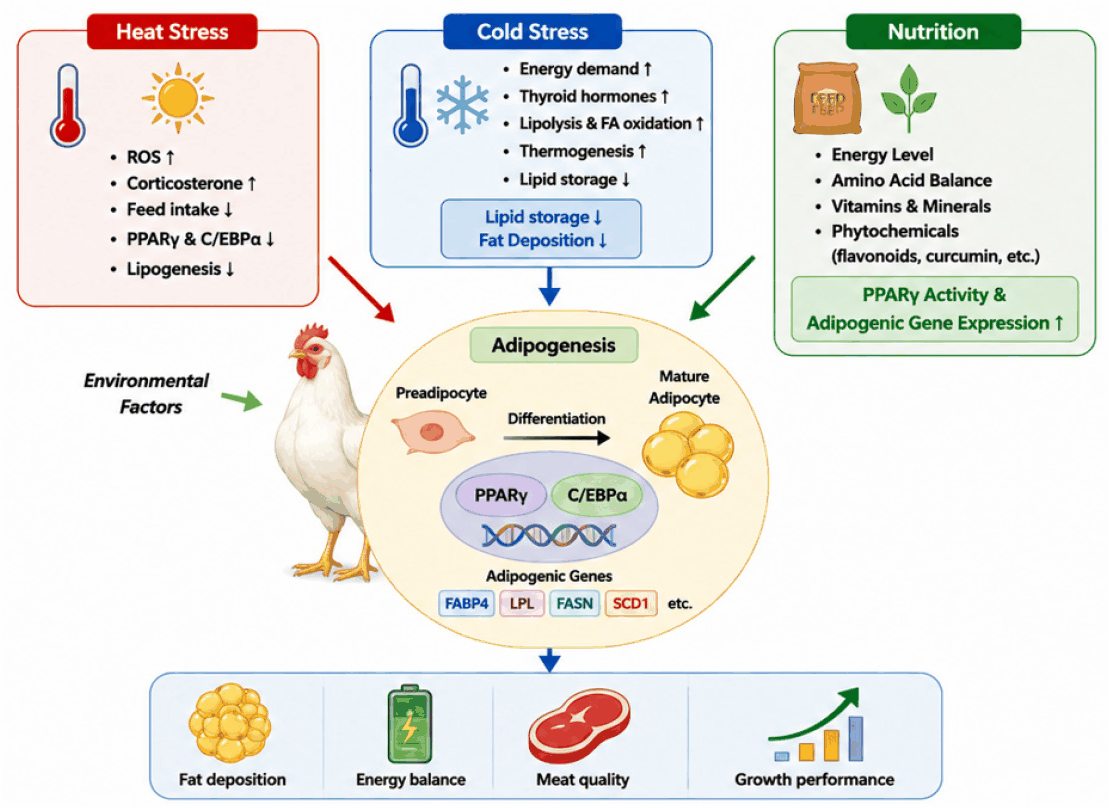
Heat stress is a major environmental challenge in poultry production. Exposure to elevated ambient temperature reduces feed intake and alters endocrine, metabolic, immune, and oxidative responses [63]. These changes can substantially modify nutrient partitioning and lipid metabolism. Studies in broilers indicate that heat stress can alter hepatic lipid metabolism and promote metabolic conditions favoring fat accumulation despite reduced feed intake [63,64]. Increased oxidative stress and mitochondrial dysfunction may further modify pathways involved in lipid synthesis, utilization, and storage. However, the precise contribution of individual adipogenic pathways to heat stress-induced fat deposition remains incompletely defined. Heat stress also elevates circulating corticosterone, which may influence adipose metabolism through glucocorticoid signaling. Corticosterone has been shown to regulate genes involved in lipid uptake, synthesis, and mobilization in broiler white adipose tissue and chicken adipocytes [46]. Thus, heat-induced alterations in fat deposition likely reflect interactions among endocrine responses, hepatic metabolism, oxidative stress, and adipocyte function rather than activation of a single adipogenic pathway.
Cold exposure increases the energetic requirement for maintenance and thermogenesis and consequently alters energy partitioning in chickens [65,66]. Under cold conditions, nutrients that might otherwise support growth or lipid storage are increasingly directed toward heat production and maintenance metabolism. Cold stress can modify hepatic and muscular lipid metabolism, including pathways involved in fatty acid oxidation and mitochondrial energy production. Changes in AMPK–PPAR-related signaling, ACC activity, and CPT1-associated fatty acid oxidation have been reported in chickens exposed to cold conditions, supporting a metabolic shift toward increased lipid utilization [13]. Cold exposure is also associated with oxidative stress and activation of cellular defense mechanisms, including antioxidant systems and heat shock proteins. These stress-responsive mechanisms may indirectly influence adipogenesis by modifying mitochondrial function, cellular redox status, and metabolic signaling. Nevertheless, the direct effects of chronic cold exposure on chicken adipocyte differentiation remain less well characterized than its effects on whole-body energy metabolism.
Nutritional factors can influence chicken adiposity through distinct mechanisms, including hepatic lipogenesis and lipid export, adipocyte proliferation and differentiation, lipid storage, and ultimately whole-body fat deposition. Therefore, changes in abdominal or carcass fat resulting from dietary interventions should not necessarily be interpreted as direct effects on adipogenesis unless adipocyte proliferation or differentiation has been specifically evaluated. Dietary energy and nutrient balance primarily affect fat deposition in chickens through changes in hepatic lipid metabolism and the subsequent supply of circulating lipids to adipose tissue [67]. Protein and amino acid balance can also influence both hepatic lipid metabolism and adipose tissue development. More recently, dietary isoleucine supplementation in broilers fed a low-protein diet reduced liver fat and abdominal fat deposition, accompanied by decreased expression of PPARγ, C/EBPα, and proliferation-related genes in abdominal adipose tissue and modulation of hepatic AMPK, JAK2/STAT3, and lipid metabolic pathways [68]. Thus, the effects of amino acid balance may involve both systemic lipid metabolism and adipose tissue responses. Methyl-donor-related nutrients may also influence adipose development. Dietary folic acid supplementation reduced abdominal fat deposition in broilers and decreased the expression of genes associated with adipocyte proliferation and differentiation, including PPARγ, C/EBPα, FABP4, PLIN1, and PCNA. These changes were accompanied by alterations in gut microbiota and short-chain fatty acid production, suggesting a potential microbiota–metabolite–adipose regulatory mechanism [69]. Dietary bioactive compounds, including flavonoids and other polyphenols, may similarly modulate lipid synthesis, fatty acid oxidation, antioxidant pathways, and adipogenic signaling, although direct evidence for their effects on chicken adipocyte differentiation remains limited [70].
Early feed restriction has been shown to reduce abdominal fat deposition and alter adipose tissue cellularity in broilers [71–73]. These findings indicate that early nutritional restriction can influence subsequent adipose tissue development, although changes in fat mass or adipocyte cellularity should not necessarily be interpreted as direct effects on adipocyte differentiation. Overall, nutritional interventions in chickens may act at multiple levels, and their effects should therefore be interpreted according to whether the primary outcome involves hepatic lipid metabolism, adipocyte development, lipid storage, or whole-body fat deposition.
Environmental and nutritional influences on adipogenesis are highly interactive. Heat stress, for example, simultaneously changes feed intake, endocrine function, oxidative balance, and nutrient utilization. Nutritional interventions may in turn modify the ability of birds to adapt to environmental stress through effects on antioxidant capacity, mitochondrial function, and metabolic flexibility. Therefore, effective control of fat deposition requires integrated consideration of environmental conditions and nutritional management rather than treatment of these factors independently. Studies of Korean native chickens indicate that production conditions can influence growth and meat-quality traits. Stocking density affected growth performance without significantly altering meat fat content [74], whereas slaughter age influenced fatty acid composition and meat-quality characteristics [75]. These findings highlight the importance of production conditions when interpreting variation in lipid and meat-quality phenotypes. Importantly, changes in systemic lipid metabolism or tissue-level fat deposition should not be interpreted as direct evidence of altered adipogenesis unless effects on adipocyte proliferation or differentiation have been experimentally demonstrated. Understanding their interactions with adipogenic signaling networks may facilitate development of more precise strategies for controlling fat deposition while maintaining growth and animal resilience [6,63,67]. Chicken-specific evidence for the effects of environmental and nutritional factors on adipogenesis, lipid metabolism, and fat deposition is summarized in Table 2, with the primary biological outcome distinguished to avoid equating changes in tissue fat mass with direct regulation of adipocyte differentiation.
| Factor/intervention | Chicken model | Primary outcome | Major effect/interpretation | Evidence | Ref. |
|---|---|---|---|---|---|
| Heat stress | Broilers | Hepatic lipid metabolism/fat deposition | Promoted hepatic lipid accumulation; does not by itself demonstrate altered adipocyte differentiation. | In vivo | [63,64] |
| Cold exposure | Broiler chicks | Energy metabolism/lipid utilization | Increased thermogenic demand and altered avian UCP and thyroid-related responses. | In vivo | [65] |
| Cold exposure/oxidative stress | Neonatal chicks | Oxidative metabolism | Increased oxidative damage; direct effects on adipogenesis remain incompletely defined. | In vivo | [66] |
| Cold stress | Chicks/subcutaneous adipose tissue | Adipose remodeling | Altered adipocyte-macrophage interactions associated with adipose angiogenesis. | In vivo/tissue | [13] |
| Low-protein diet + isoleucine | Broilers | Hepatic metabolism + adipose response | Reduced liver/abdominal fat and adipose PPARγ/C/EBPα-related expression; modulated hepatic AMPK and JAK2/STAT3. | In vivo molecular | [68] |
| Folic acid | Broilers | Adipose gene expression/fat deposition | Reduced abdominal fat and adipose proliferation/differentiation-related gene expression. | In vivo molecular | [69] |
| Dietary flavonoids | Poultry | Lipid metabolism | Modulate lipid synthesis, oxidation, antioxidant path-ways, and adipogenic signaling; direct differentiation evidence remains limited. | Review/mixed | [70] |
| Early feed restriction | Broilers | Adipose cellularity/fat deposition | Reduced abdominal fat and altered adipose cellularity. | In vivo | [71–73] |
Outcome categories distinguish direct adipocyte proliferation/differentiation from hepatic lipid metabolism, adipose lipid storage/cellularity, and tissue-level fat deposition. Changes in fat mass alone were not interpreted as direct evidence of altered adipogenesis.
PPARγ, peroxisome proliferator-activated receptor gamma; C/EBP, CCAAT/enhancer-binding protein; AMPK, AMP-activated protein kinase.
Genetic and genomic approaches
Fat deposition in chickens is a complex quantitative trait controlled by multiple genes, regulatory elements, and gene–environment interactions. Advances in quantitative genetics and genomic technologies have enabled increasingly detailed characterization of the genetic architecture underlying abdominal fat, IMF, feed efficiency, and related traits.
QTL mapping and GWAS have identified multiple genomic regions associated with abdominal fat and other fatness-related traits in chickens. Integration of high-density genotyping with whole-genome sequence information has further refined these regions and identified positional candidate genes involved in adipocyte differentiation, lipid biosynthesis, and insulin-related metabolic processes. A genome-wide association study in KNC-R identified genomic regions associated with breast-muscle fatty acid composition, including several candidate genes related to lipid metabolism [76]. These findings support a genetic basis for variation in muscle lipid traits in KNCs and their potential use in genomic selection for meat-quality traits. However, most genomic associations do not by themselves establish causal roles in adipogenesis, emphasizing the need for integration with transcriptomic, epigenomic, and functional studies.
Recent genomic and multi-omics studies have shifted the focus from identifying individual candidate genes toward defining integrated regulatory networks underlying chicken adipose development and fat deposition. Recent profiling of the chicken adipose super-enhancer land-scape identified adipose-specific regulatory regions associated with genes involved in PI3K-Akt, PPAR, Hippo, and JAK-STAT signaling, with enrichment of binding sites for key adipogenic transcription factors, including PPARγ, C/EBPα, C/EBPβ, EBF2, and KLF family members [8]. These findings provide an epigenomic framework linking adipogenic transcription factors to higher-order regulatory elements in chicken adipose tissue. Similarly, integrative analyses combining whole-genome resequencing with transcriptomic and metabolomic profiling of broilers differing in abdominal fat deposition have identified candidate regulatory genes and metabolic pathways associated with the high- and low-fat phenotypes [62]. Together with recent ATAC-seq/RNA-seq studies of chicken adipose development and preadipocyte differentiation, these findings illustrate how multi-omics approaches can connect genetic variation, chromatin regulation, gene expression, and metabolic phenotypes. However, many candidate regulatory relationships identified by these approaches remain association-based and require functional validation.
Transcriptomic approaches have greatly expanded understanding of adipogenesis by enabling genome-wide characterization of gene expression across developmental stages, adipose depots, and chicken populations differing in fatness. RNA sequencing has identified differentially expressed genes involved in lipid metabolism, adipocyte differentiation, extracellular matrix remodeling, and signaling pathways such as PPAR and AMPK [6,17]. Transcriptomic studies have also revealed extensive expression of regulatory non-coding RNAs, including miRNAs, ln-cRNAs, and circRNAs, further demonstrating the multilayered regulation of chicken adipogenesis [53,55]. More recently, single-cell RNA sequencing has enabled characterization of cellular heterogeneity within adipose and muscle tissues. Identification of distinct adipogenic precursor and other cell populations provides a framework for understanding depot-specific adipogenesis and differences between abdominal and intramuscular fat deposition [24].
Functional validation is necessary to distinguish genes that merely correlate with adiposity from those that directly regulate adipogenesis. Gene overexpression, RNA interference, and related approaches have demonstrated functional roles for key adipogenic transcription factors such as PPARγ in chicken preadipocytes [28]. CRISPR/Cas9 technology has further expanded the possibilities for functional genomic analysis in chickens. Successful CRISPR/Cas9-mediated targeted mutagenesis has been demonstrated using chicken primordial germ cells, followed by production of germline-transmitting mutant birds [77]. Although these initial studies were not directed specifically at adipogenesis, they establish a platform for future functional validation of genes and regulatory elements involved in fat deposition. Gene-editing approaches should therefore be regarded primarily as powerful experimental tools for defining gene function. Their direct application to commercial breeding remains subject to technical, regulatory, ethical, and consumer-acceptance considerations.
Genomic information has important implications for selection against excessive abdominal fat while maintaining growth performance and desirable meat-quality traits. Early QTL studies established the genetic basis for marker-assisted approaches, whereas dense genome-wide marker information now enables genomic selection based on genome-wide breeding values [78]. Because abdominal fat, IMF, growth, and feed efficiency are genetically and physiologically interconnected, selection programs should consider correlated responses among these traits. Selection aimed solely at minimizing total fat may not necessarily optimize meat quality if desirable IMF is simultaneously reduced.
The integration of genomics with transcriptomics, epigenomics, metabolomics, and single-cell datasets offers a powerful strategy for identifying causal regulatory networks under-lying adipogenesis [24,62]. Such multi-omics approaches can connect genetic variants with changes in regulatory elements, gene expression, metabolic pathways, and ultimately phenotypic fat deposition. Future studies integrating multi-tissue and longitudinal datasets should be particularly valuable in chickens because adipose deposition depends on interactions among hepatic lipid synthesis, adipocyte differentiation, and muscle energy metabolism. This systems-level framework may facilitate identification of robust biomarkers and regulatory targets for both genetic selection and nutritional intervention. Recent chicken studies using genomic, epigenomic, transcriptomic, and multi-omics approaches are summarized in Table 3, with functionally validated mechanisms distinguished from association-based findings.
| Approach | Chicken model/tissue | Major biological insight | Interpretation/validation | Ref. |
|---|---|---|---|---|
| Single-cell RNA-seq | Pectoral muscle and abdominal fat | Identified cellular heterogeneity associated with differential abdominal and intramuscular fat deposition. | Single-cell association; defines candidate adipogenic populations. | [24] |
| miRNA-mRNA profiling | Abdominal preadipocyte differentiation | Revealed dynamic miRNA-mRNA networks associated with adipocyte differentiation. | Omics association; selected miR-NAs require validation. | [50,51] |
| Functional miRNA analysis | Chicken preadipocytes | Identified gga-miR-106-5p-KLF15 as a regulatory axis inhibiting adipogenesis. | Functionally validated. | [52] |
| lncRNA/circRNA/whole-transcriptome | Abdominal preadipocytes/fat deposition | Identified ceRNA and regulatory RNA networks associated with adipogenesis and lipid metabolism. | Predominantly association/network-based. | [53–55] |
| ATAC-seq + RNA-seq | Broiler abdominal fat/preadipocyte models | Revealed dynamic chromatin accessibility and regulatory networks during adipose development/differentiation. | Epigenomic association; candidate regulators require validation. | [48,49] |
| MeRIP-seq + RNA-seq + functional assays | Chicken preadipocytes | Defined an m6A-dependent ALKBH5-LCAT mechanism regulating proliferation and differentiation. | Omics discovery with functional validation. | [56] |
| Super-enhancer profiling | Chicken adipose tissue | Mapped adipose-specific super-enhancers linked to adipogenic and metabolic signaling networks. | Epigenomic regulatory association. | [8] |
| WGS + transcriptomics + metabolomics | Broilers with divergent abdominal fat | Integrated genetic, transcriptional, and metabolic signals associated with abdominal fat deposition. | Multi-omics association; causal roles require validation. | [62] |
| GWAS | KNC-R breast muscle | Identified genomic regions associated with breast-muscle fatty acid composition. | Genomic association; relevant to muscle lipid traits rather than direct adipogenesis. | [76] |
| GWAS + WGS | Chicken fatness traits | Refined genomic regions and candidate genes associated with abdominal and carcass fat deposition. | Genomic association; supports candidate prioritization. | [79] |
miRNAs, microRNAs; ceRNAs, competing endogenous RNA; lncRNAs, long non-coding RNAs; circRNAs, circular RNAs; ATAC-seq, assay for transposase-accessible chromatin with sequencing; MeRIP-seq, methylated RNA immunoprecipitation sequencing; WGS, whole-genome sequencing; GWAS, genome-wide association study; KNC-R, red-brown Korean native chicken.
Implications for poultry production
Understanding the distinction between adipogenesis and fat deposition is important for poultry production. Adipogenesis determines the formation of new adipocytes, whereas car-cass fatness reflects the combined effects of adipocyte number, adipocyte hypertrophy, lipid uptake and storage, and systemic lipid supply. Therefore, the production objective is not simply to suppress adipocyte differentiation but to optimize lipid distribution among abdominal adipose tissue, skeletal muscle, and other tissues. Excessive abdominal fat represents inefficient nutrient partitioning and reduces carcass efficiency, making it a long-standing target of genetic and nutritional intervention [18,67,79]. In contrast, moderate intramuscular fat can contribute positively to tenderness, juiciness, and flavor [4,58]. These depot-specific consequences indicate that selection against abdominal fat should avoid unintended reductions in desirable intramuscular fat, and genomic evidence increasingly supports distinct regulatory architectures for abdominal and intramuscular fat deposition [16,24]. Excessive lipid storage can reduce production efficiency when dietary energy is partitioned away from lean-tissue growth. Because fat deposition in chickens depends on hepatic lipogenesis, adipocyte storage capacity, skeletal muscle metabolism, and nutrient-sensing pathways, effective control requires coordinated genetic, nutritional, and environmental strategies rather than manipulation of a single adipogenic pathway [6,67]. Thermal management is also relevant because heat and cold stress alter endocrine function, oxidative balance, and lipid metabolism [63–65].
Genomic selection and multi-omics approaches provide opportunities to identify birds that partition nutrients more efficiently and to distinguish molecular determinants of excessive abdominal fat from those supporting desirable intramuscular fat. Integrating genomic information with transcriptomic, metabolomic, nutritional, and environmental data may improve the precision of breeding and feeding strategies [16,62,79]. The practical value of these approaches will depend on translating molecular associations into robust biomarkers and interventions that improve carcass traits, meat quality, feed efficiency, and resilience under commercial production conditions.
Conclusion and future perspectives
Chicken adipogenesis is regulated by coordinated transcriptional, signaling, epigenetic, and post-transcriptional mechanisms that interact with systemic lipid metabolism and environmental and nutritional factors. Although several key regulators, including PPARγ, AMPK-related signaling, and specific non-coding RNAs, have been functionally investigated in chicken models, many regulatory mechanisms remain inferred from mammalian studies or association-based omics data. Importantly, adipocyte differentiation should be distinguished from adipocyte lipid storage, hepatic lipid metabolism, and whole-body fat deposition when interpreting experimental findings in chickens.
Future research should prioritize: (1) functional validation of candidate genes, regulatory elements, and signaling pathways identified by genomic and multi-omics studies using chicken-specific experimental models; (2) characterization of depot- and cell-specific adipogenic progenitors, particularly those contributing to abdominal and intramuscular adipose development; (3) integration of single-cell, epigenomic, epitranscriptomic, transcriptomic, and metabolomic approaches to define regulatory networks underlying chicken adipogenesis; and (4) determination of how genotype, age, sex, physiological state, nutrition, and environmental stress modify adipogenesis and its relationship with fat deposition. Addressing these questions will improve the mechanistic understanding of avian adipose biology and may support strategies for controlling excessive fat deposition while maintaining production efficiency and meat quality.