Article

산란계 쪼는 물질 제공에 따른 깃털 상태 및 복지지표 개선 효과: 메타분석

이우도1https://orcid.org/0000-0003-4861-4637, 김찬호1,https://orcid.org/0000-0003-2121-5249, 손지선2https://orcid.org/0000-0002-5285-8186, 양가영1https://orcid.org/0000-0003-3232-6075, 방한태3https://orcid.org/0000-0003-0441-3542, 전중환4https://orcid.org/0000-0001-9725-547X
Woo-Do Lee1https://orcid.org/0000-0003-4861-4637, Chan-Ho Kim1,https://orcid.org/0000-0003-2121-5249, Jiseon Son2https://orcid.org/0000-0002-5285-8186, Ka-Young Yang1https://orcid.org/0000-0003-3232-6075, Han Tae Bang3https://orcid.org/0000-0003-0441-3542, Jung-Hwan Jeon4https://orcid.org/0000-0001-9725-547X
Author Information & Copyright
1국립축산과학원 동물복지과 농업연구사
2국립축산과학원 가축정밀영양과 농업연구사
3국립축산과학원 동물복지과 농업연구관
4강원대학교 동물생명과학대학 동물산업융합학과 교수
1Researcher, Animal Welfare Division, National Institute of Animal Science, Rural Development Administration, Wanju 55365, Republic of Korea
2Researcher, Animal Nutrition and Physiology Division, National Institute of Animal Science Rural Development Administration, Wanju 55365, Republic of Korea
3Senior Researcher, Animal Welfare Division, National Institute of Animal Science, Rural Development Administration, Wanju 55365, Republic of Korea
4Professor, Department of Animal Industry Convergence, College of Animal Life Sciences, Kangwon National University, Chuncheon 24341, Republic of Korea
To whom correspondence should be addressed : kch8059@korea.kr

© Copyright 2026, Korean Society of Poultry Science. This is an Open-Access article distributed under the terms of the Creative Commons Attribution Non-Commercial License (http://creativecommons.org/licenses/by-nc/4.0/) which permits unrestricted non-commercial use, distribution, and reproduction in any medium, provided the original work is properly cited.

Received: Feb 24, 2026; Revised: Mar 23, 2026; Accepted: Apr 01, 2026

Published Online: Mar 31, 2026

ABSTRACT

This meta-analysis aimed to evaluate the effects of providing pecking materials as environmental enrichment on feather damage and selected physical welfare indicators in laying hens. A systematic literature search was conducted using electronic databases, and studies investigating the effects of pecking material provision on region-specific feather damage or physical welfare parameters were selected according to predefined inclusion criteria. A total of eight articles comprising ten independent experiments were included in the final analysis. The pooled results indicated that the provision of pecking materials significantly improved feather condition in the neck, back, and wing regions, as well as overall body feather status. In addition, a significant reduction in comb wound counts was observed, suggesting a decrease in injurious pecking behavior. These findings imply that providing manipulable pecking materials may redirect pecking activity away from conspecifics and stimulate natural exploratory and foraging behaviors, thereby contributing to improved welfare outcomes. Despite these positive effects, heterogeneity was observed among studies, which may be attributed to differences in housing systems, hen genotype and age, types of pecking materials, and feather scoring methods. Therefore, the results should be interpreted with caution. Nevertheless, the present findings support the practical application of pecking materials as an environmental enrichment strategy to enhance behavioral and physical welfare in laying hens. Further standardized, large-scale, and long-term studies are required to strengthen the evidence base and improve the generalizability of the conclusions.

Keywords: 동물복지; 환경 풍부화; 산란계; 메타분석; 쪼는 물질
Keywords: animal welfare; environmental enrichment; laying hens; meta-analysis; pecking material

서 론

산란계의 동물복지(animal welfare)는 전 세계 가금 산업에서 지속적으로 강조되고 있는 핵심 이슈 중 하나로, 단순히 생산성 향상을 넘어 윤리적 사육과 지속 가능한 축산업을 위한 필수 요소로 인식되고 있다(Fiorilla et al., 2024). 산란계의 복지는 건강 상태, 생리적 안정성 외에도 자연 행동 표현과 밀접하게 연관되어 있으며, 이러한 행동적 요구가 충족되지 않을 경우 다양한 복지 저하 문제가 발생할 수 있다(Janczak et al., 2015; Jeon et al., 2025).

닭의 본능적 행동인 탐색(foraging), 쪼기(pecking), 긁기(scratching)는 환경 탐색과 스트레스 완화 등 복지 유지에 중요한 역할을 한다(Xu et al., 2022). 하지만 상업적 사육 환경에서는 밀집된 공간과 단조로운 환경 구조로 인해 행동 표현이 제한되는 경우가 많다(Xu et al., 2022). 그 결과, 탐색 행동이 깃털 쪼기(feather pecking)나 공격적 쪼기(injurious pecking)로 전이되며, 이는 산란계 복지 저하의 주요 원인으로 지적되어 왔다(Zepp et al., 2018; Xu et al., 2022). 이러한 비정상적 쪼기 행동은 깃털 손상과 피부 및 볏의 상처를 유발하고, 심한 경우 출혈과 폐사로 이어질 수 있다(Fijn et al., 2020; Michel et al., 2022). 특히 깃털 손상은 체온 유지 능력 저하로 인해 에너지 요구량과 사료 섭취량을 증가시키며(Zhang et al., 2022), 볏 손상은 통증과 감염 위험을 높여 건강 악화의 원인이 된다(Riber and Hinrichsen, 2017).

한편, 발톱 길이(claw length)는 산란계의 중요한 신체적·기능적 복지 지표로 주목받고 있다(Oliveira et al., 2019; Shi et al., 2019). 발톱이 과도하게 길어질 경우 바닥 구조물이나 횃대(perch) 사용 시 부상의 위험이 증가하고, 활동성 감소 및 스트레스 반응을 유발할 수 있다(Lay Jr et al., 2011). 발톱 마모는 바닥 재질과 행동 패턴에 의해 크게 영향을 받기 때문에, 환경 풍부화(environmental enrichment) 적용 효과를 간접적으로 나타내는 지표로 활용될 수 있다(Roenchen et al., 2007).

이러한 문제를 완화하기 위해 다양한 관리적·환경적 개입 전략이 제안되어 왔으며, 그중 하나가 쪼는 물질(pecking materials)의 제공이다(van Staaveren et al., 2021). 쪼는 물질은 산란계가 자연적인 탐색 및 쪼기 행동을 안전하게 발현할 수 있도록 유도하는 환경 풍부화 요소로, 지푸라기, 볏짚, 풀, 로프, 목재 블록, 펠릿 형태의 고체 물질 등 다양한 형태로 제공되고 있다(Sandilands et al., 2022; Son et al., 2022; Xu et al., 2022). 쪼는 물질 제공은 닭의 주의를 분산시키고, 공격적 쪼기 행동을 대체할 수 있는 행동적 기회를 제공함으로써 복지 개선 효과를 야기할 수 있다(Dixon et al., 2010).

기존 연구에서는 쪼는 물질 제공이 깃털 손상도 감소, 공격성 완화, 피부 및 볏 손상 감소에 긍정적인 영향을 미친다고 보고한 바 있다(Bari et al., 2020a; van Staaveren et al., 2021; Xu et al., 2022). 또한 일부 연구에서는 바닥을 긁거나 물질을 반복적으로 쪼는 행동 증가로 인해 발톱 마모가 촉진되어 발톱 길이가 감소하거나 안정적으로 유지됨을 보고하였다(Glatz et al., 2002; Shi et al., 2019). 그러나 이러한 결과는 모든 연구에서 일관되게 나타나지는 않으며, 사육 시스템(cage, floor, free-range), 쪼는 물질의 종류와 제공 빈도, 실험 기간, 평가 방법 등에 따라 상이한 결과가 보고되고 있다(Schreiter et al., 2019; van Staaveren et al., 2021). 한편, 메타분석은 여러 독립적인 연구 결과를 종합하여 사전에 정의된 가설에 기반한 결론을 도출할 수 있는 강력한 통계적 접근방법이다(Irawan et al., 2020; Yunitasari et al., 2023). 이러한 접근법은 표본 크기를 확대하고 효과를 정량적으로 평가함으로써 개별 연구 해석에서 발생할 수 있는 주관성을 줄이고 보다 신뢰성 있는 결론을 도출할 수 있게 한다(Ogbuewu and Mbajiorgu, 2022).

따라서 본 연구의 목적은 산란계 사육환경에서 쪼는 물질의 제공이 깃털 손상도와 복지지표에 미치는 영향을 정량화하는 것이었다. 분석한 지표는 산란계의 부위(목, 등, 가슴, 날개, 꼬리)별 점수 및 전반적인 신체 점수와 볏 상처 수, 발톱 길이였다. 본 연구 결과는 산란계의 쪼는 물질 제공 효과에 대하여 체계적인 정보를 제공하고 복지 수준을 극대화하기 위한 기초 자료로서 활용될 것이라 기대된다.

재료 및 방법

1. 문헌 검색 및 선정

문헌 검색은 2024년 9월부터 2025년 5월까지 Google Scholar, Web of Science, Scopus, PubMed 등 여러 데이터베이스를 이용하였다. 메타분석에 충분한 문헌을 확보하기 위하여 출판일은 제한 두지 않았다. 또한 산란계의 쪼는 물질 제공 효과만을 비교하고자 하였으므로, 연구 간의 사육 환경 차이는 고려하지 않았다. 검색어는 “laying hens” or “layers” and “enrichment” or “pecking material” and “pecking object” or “feather damage” or “feather condition” or “number of comb wounds” or “nail length”를 조합하여 구성하였으며, 자료 추출 및 결과 해석의 일관성과 재현성을 확보하기 위해 영어로 출판된 문헌을 중심으로 선별하였다. 특히 깃털 손상도에서는 점수 체계 차이로 인해 해석, 정량화의 제한이 있어, 본 연구에서는 4점의 동일한 점수 척도(Tauson et al., 2005; Table 1)로 측정한 문헌을 선정하였다. 문헌 검색은 두 명의 연구자가 독립적으로 수행하였고 논문은 제목과 초록 내용 중심으로 선별되었다. 이후 각각의 선별된 논문들을 비교, 적합성 기준에 따라 선정하였다. 선정된 문헌은 전문을 읽고 분석 지표 관련 데이터를 추출하여 메타분석을 수행하였다.

Table 1. Description of the scoring scheme used for the assessment of feather condition
Score Feather loss
1 >75% of the feathers of the body region missing
2 >50% and <75% of the feathers of the body region missing
3 >25% and <50% of the feathers of the body region missing
4 No feather loss or <25% of the feathers of the body region missing
Download Excel Table
2. 선정 기준

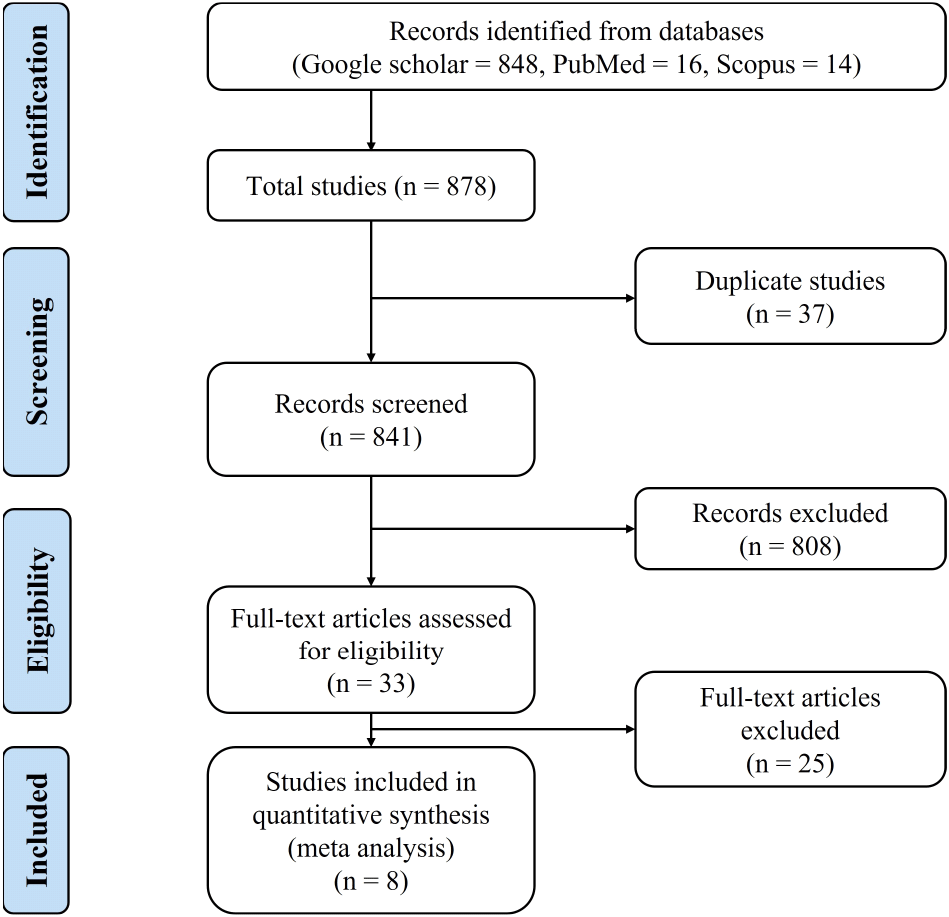
메타분석 활용 문헌 선정은 다음의 기준을 충족하였다. ① 2025년 5월까지 peer-reviewed journal에 출판된 완전한 연구 문헌; ② 쪼는 물질을 제공한 그룹(처리구)과 제공하지 않은 그룹(대조구)을 비교한 연구; ③ 쪼는 물질을 환경 풍부화물로 제공하였을 때 산란계의 깃털 손상도, 볏 상처 수, 발톱 길이 지표 중 하나 이상을 제시한 연구; ④ 분석 수행에 필요한 정보[실험 설계, 평균, 표준편차(standard deviation, SD), 평균의 표준오차(standard error of mean, SEM), 반복수]를 제공한 연구. 반면, 제외 기준은 다음과 같다. ① review, letters, commentaries 등 독창적이지 않은 연구; ② 쪼는 물질 외에 횃대나 발톱 연마제와 같은 다른 유형의 물체를 동시에 제공한 연구; ③ 산란계의 깃털 손상도와 볏 상처 수, 발톱 길이 지표 중에 분석 항목이 없는 연구; ④ 필요한 정보(실험 설계, 평균, SD, SEM, 반복수)를 제공하지 않은 연구. 이러한 기준에 따라 총 8편의 논문을 수집하였고 10개의 실험에서 데이터를 추출하여 체계적 문헌 검토를 수행하였다. 문헌 검색 및 선정 과정에 대한 흐름도(preferred reporting items for systematic reviews and meta-Analyses, PRISMA)는 Fig. 1에 나타내었다.
kjps-53-1-49-g1
Fig. 1. PRISMA flow diagram of the systematic review and meta-analysis.
Download Original Figure
3. 데이터 추출

선정된 문헌에서 분석 지표와 관련 있는 데이터를 추출하였다. 표준화된 데이터 추출 양식을 사용하여 출판 연도, 저자, 사육 유형, 산란계 품종 및 주령, 부리 다듬기 여부, 반복수, 제공한 쪼는 물질 종류, 분석 지표 등의 데이터를 수집하였다(Table 2). 메타분석에 필요한 각 연구의 데이터는 다음의 절차에 따라 수집되었다. 대조구와 처리구의 평균, 표준편차, 표본 크기(n)을 추출하였으며, 연구에서 표준편차가 보고되지 않은 경우에는 SD = SE × sqrt(n) 공식을 활용하여 표준편차 값을 확인하였다(Feng et al., 2020). 모든 데이터는 동일한 측정 단위로 변환하여 분석하였으며, 데이터가 그래프로 제시된 경우에는 온라인 데이터 추출 도구인 WebPlotDigitizer(automeris.io)를 사용하여 정확한 데이터 값을 추출하였다(Irawan et al., 2020).

Table 2. Overview of studies used for the meta-analysis
No. Publication Housing Species, Weeks N (n) Beak trim Enrichment type Analysis item
1 Steenfeldt et al. (2007) F ISA Brown, 16 weeks 4 (50) No Silage or Carrot Feather damage (neck, breast, back, wing, vent, overall)
2 Alm et al. (2016) F Dekalb White layers, 16 weeks 4 (75) No Mussel shells Feather damage (overall)
3 Oddon et al. (2024) F Autochthonous dual-purpose, 44 weeks 3 (15) No Larvae Feather damage (overall)
4 Johannson et al. (2016) C White Leghorn hens, 20 weeks (trial 1), 19 weeks (trial 2) 4 (20) Yes Silage Feather damage (neck, breast, back, wing, overall)
5 Moss et al. (2024) C Hy-Line Brown, 24 weeks 14 (2) NA Hanging CD Number of comb wounds, claw length
6 Iqbal et al. (2020) FR Hy-Line Brown, 16 weeks 5 (2,000), 5 (250) Both Pecking stone Feather damage (neck, breast, back, wing, vent), claw length
7 Bari et al. (2020a) FR Hy-Line Brown, 16 weeks 3 (154) Yes Balls, bottles, bricks, etc. Feather damage (overall), Number of comb wounds, claw length
8 Bari et al. (2020b) FR Hy-Line Brown, 16 weeks 3 (154) Yes Balls, bottles, bricks, etc. Number of comb wounds, claw length

N: number of experimental groups reported within each study (defined as cage, pen, or flock depending on the housing system); n: number of birds per replicate; F: Floor; C: Cage; FR: Free-range; NA: not available.

Download Excel Table
4. 이질성

각 변수에 대한 연구 간 이질성은 tau squared(τ2), Cochrane’s Q statistics P-value, 그리고 Higgin’s I2 statistic을 사용하여 평가하였다. τ2는 연구 간 분산을 나타내는 지표로, 메타분석에서 연구 간 이질성의 정도를 평가하는 데 널리 활용된다(Shi et al., 2024; Ayalew and Girma, 2025). τ2 값이 클수록 연구 결과 간 변동성이 크며, 이는 효과 추정치의 분산이 커져 전체 모집단에 대한 일반화 가능성이 낮아짐을 의미한다(Malik et al., 2023). Cochrane’s Q statistics은 포함된 연구 수가 적을 경우 검정력이 제한될 수 있으므로, 본 연구에서는 P value<0.1을 유의수준으로 설정하여 연구 간 이질성의 존재 여부를 판단하였다(Kerr et al., 2013). 또한, Higgin’s I2 statistic은 연구 간 전체 변동 중 이질성에 의해 설명되는 비율을 나타내며, 높은 이질성(I2>50%), 중간 이질성(50%≥I2>25%), 낮은 이질성(I2≤25%)으로 분류하였다(Orzuna-Orzuna and Lara-Bueno, 2023). 이 중 I2 값이 50%를 초과하는 경우, 상당한 수준의 연구 간 이질성이 존재하는 것으로 간주하여, 사육시설 형태에 따른 하위 그룹 분석(subgroup analysis)을 수행하였다(Patsopoulos et al., 2008; Rodenburg et al., 2013; Adugna et al., 2024).

5. 통계처리

선정된 문헌으로부터 관련 데이터를 체계적으로 수집·추출하여 Microsoft excel sheet로 정리하였으며, 데이터의 신뢰성을 확보하기 위해 오류, 이상치 및 결측값을 검토하였다. 모든 통계 분석은 R software(version 4.1.2)에서 수행하였고, 메타분석은 “meta” package를 사용하여 진행하였다. 처리 간 효과 비교를 위해 random-effects model(REM)을 적용하였다. REM은 연구 간 이질성이 존재하는 경우 적합한 분석 방법으로, 연구 간 변동성(true heterogeneity)과 표본 오차를 동시에 고려할 수 있다(Byrne et al., 2023; Orzuna-Orzuna and Lara-Bueno, 2023). 분석 결과는 대조구와 처리구 간의 standardized mean difference(SMD)와 95% confidence interval(CI)로 제시하였다. 효과 크기는 SMD 값이 0.2, 0.5, 0.8일 때 각각 작음(small), 중간(medium), 큼(large)으로 분류하였다. Forest plot에서 마름모 모양은 통합 효과 추정치를 나타내며, 해당 신뢰구간에 0이 포함되지 않을 경우 전체 효과는 통계적으로 유의한 것으로 판단하였다. 각 개별 연구의 효과 크기는 forest plot 내 사각형으로 표시되었다.

결 과

1. 깃털 상태
1) 목

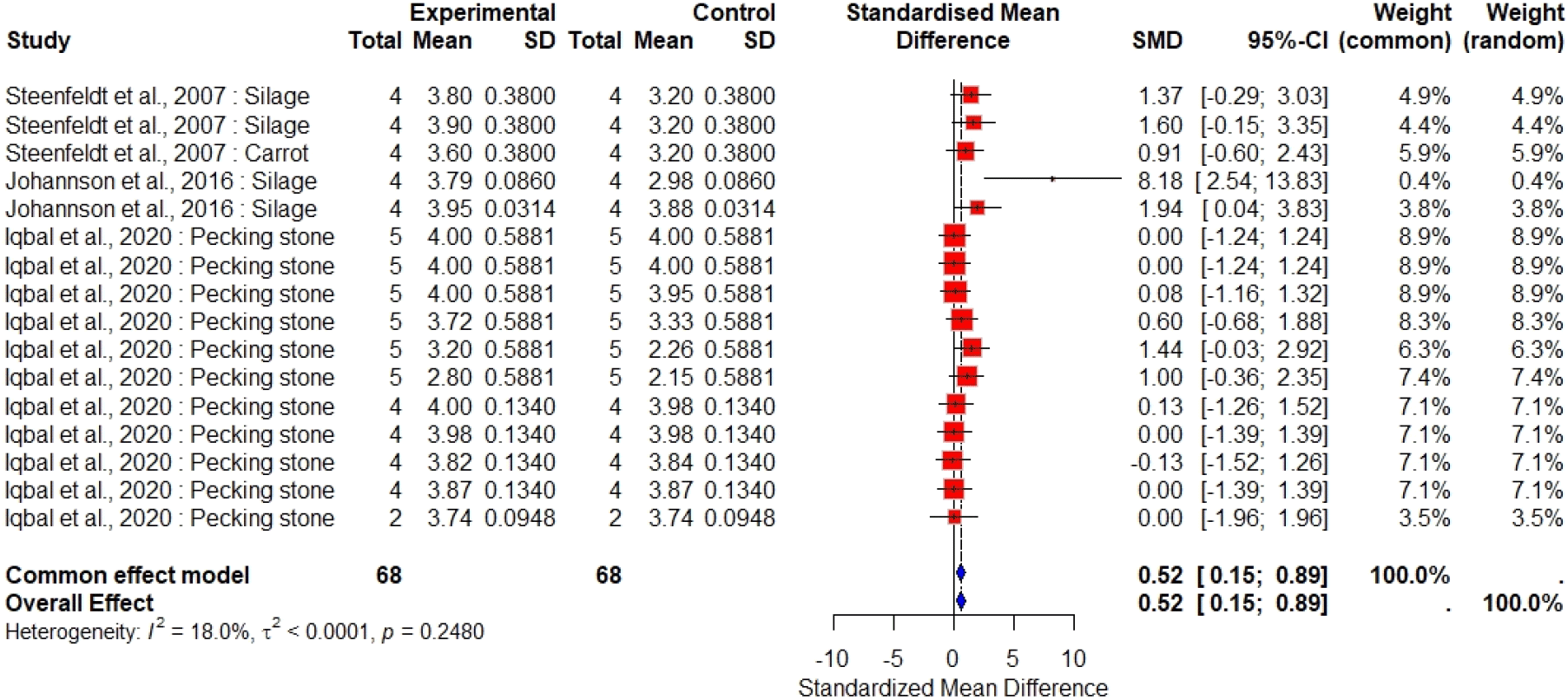
쪼는 물질 제공에 따른 산란계의 목 부위 깃털 상태 개선 효과는 Fig. 2에 제시하였다. 메타분석 결과, 목 부위 깃털 상태에 대한 쪼는 물질 제공의 효과는 중간 수준의 효과 크기를 보였다(SMD = 0.52; 95% CI: 0.15 to 0.89). 또한 연구 간 이질성은 낮은 수준으로 확인되었다(I2 = 18.0%, τ2<0.0001, P = 0.2480).
kjps-53-1-49-g2
Fig. 2. Forest plot of the effects of environmental enrichment on neck feather condition in laying hens.
Download Original Figure
2) 가슴

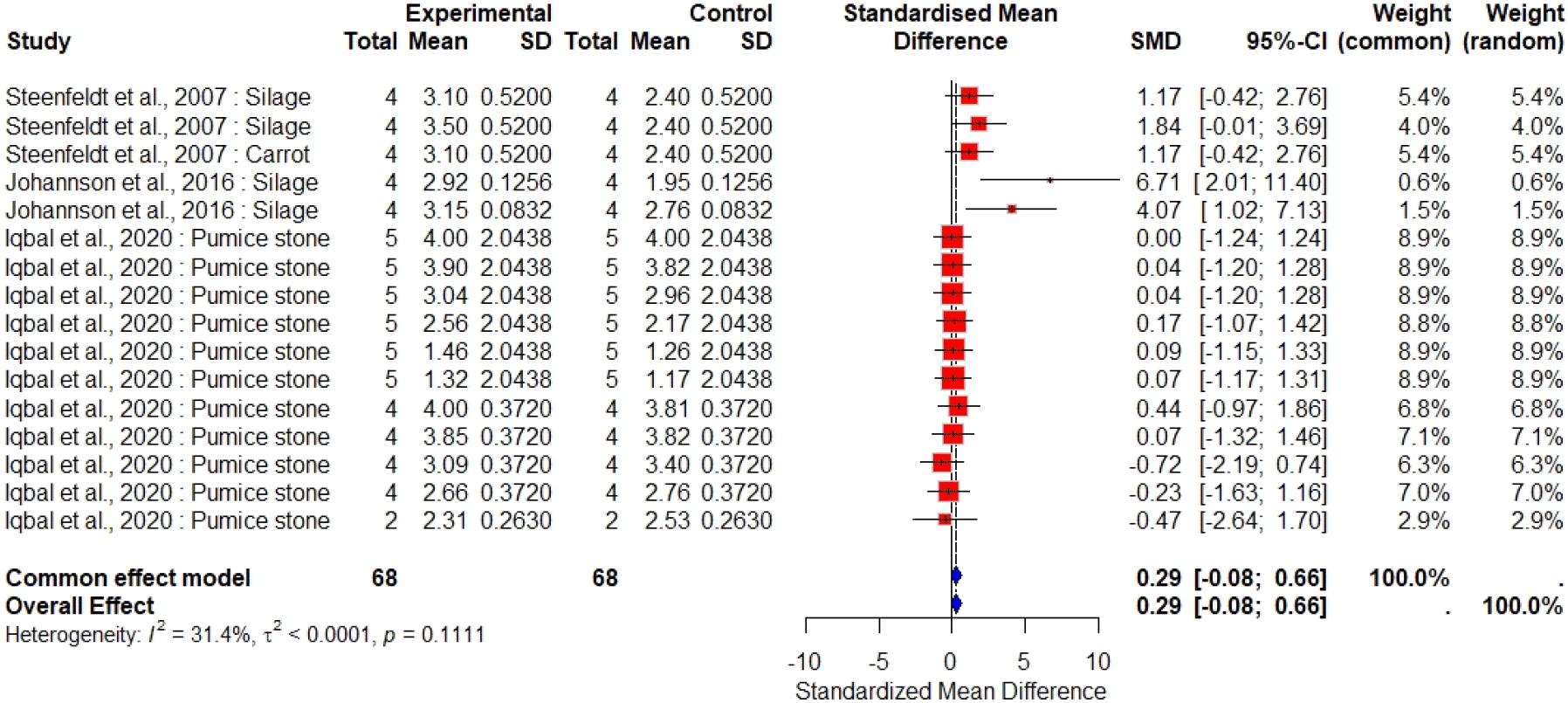
쪼는 물질 제공에 따른 산란계의 가슴 부위 깃털 상태 개선 효과는 Fig. 3과 같다. 가슴 부위 깃털 상태는 쪼는 물질 제공에 따라 개선 효과를 보이지 않았으며(SMD = 0.29; 95% CI: —0.08 to 0.66), 연구 간 이질성은 중간 수준으로 나타났다(I2 = 31.4%, τ2<0.0001, P = 0.1111).
kjps-53-1-49-g3
Fig. 3. Forest plot of the effects of environmental enrichment on breast feather condition in laying hens.
Download Original Figure
3) 등

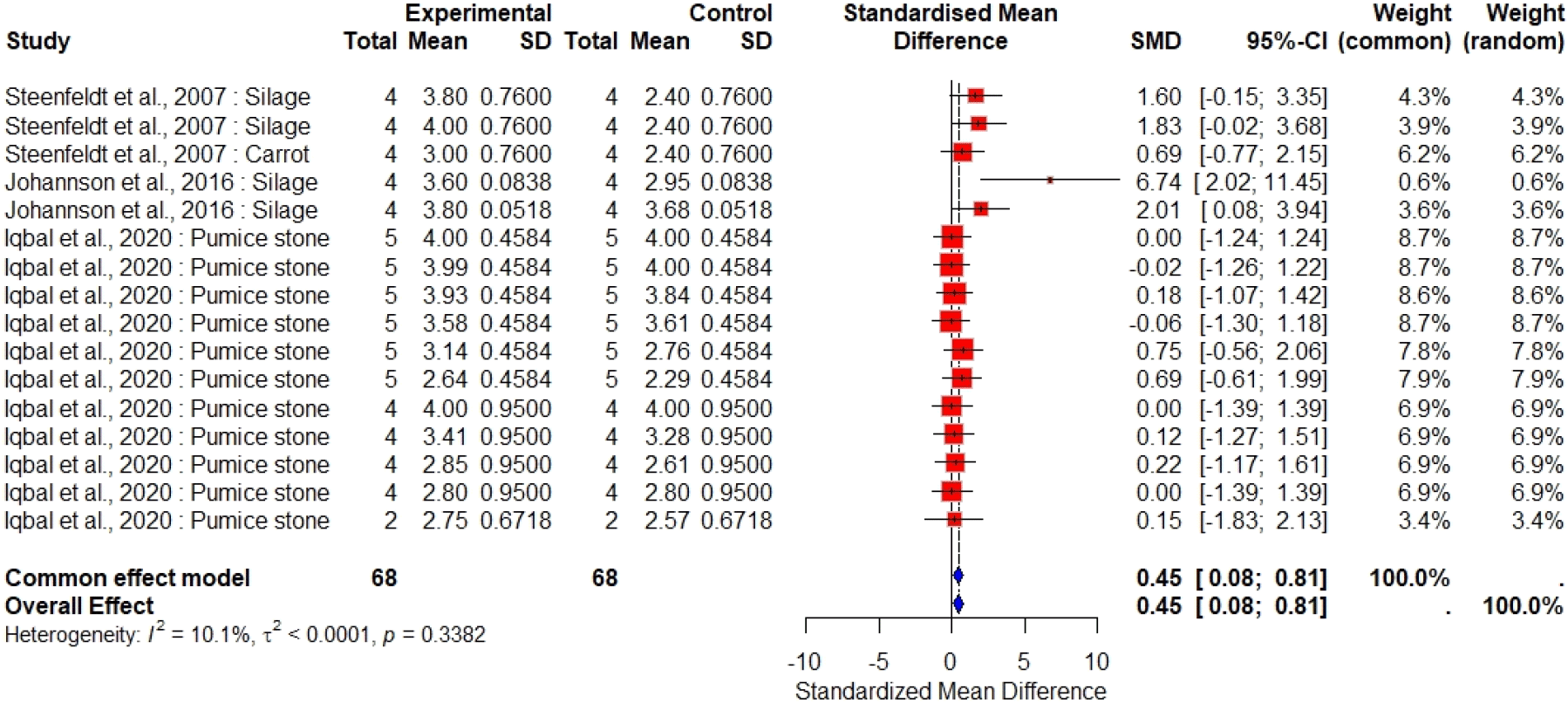
쪼는 물질 제공에 따른 산란계의 등 부위 깃털 상태 개선 효과는 Fig. 4와 같다. 등 부위 깃털 상태는 쪼는 물질 제공에 따라 효과 크기는 작음에서 중간 수준으로 나타났으며(SMD = 0.45; 95% CI: 0.08 to 0.81). 연구 간 이질성은 낮았다(I2 = 10.1%, τ2<0.0001, P = 0.3382).
kjps-53-1-49-g4
Fig. 4. Forest plot of the effects of environmental enrichment on back feather condition in laying hens.
Download Original Figure
4) 날개

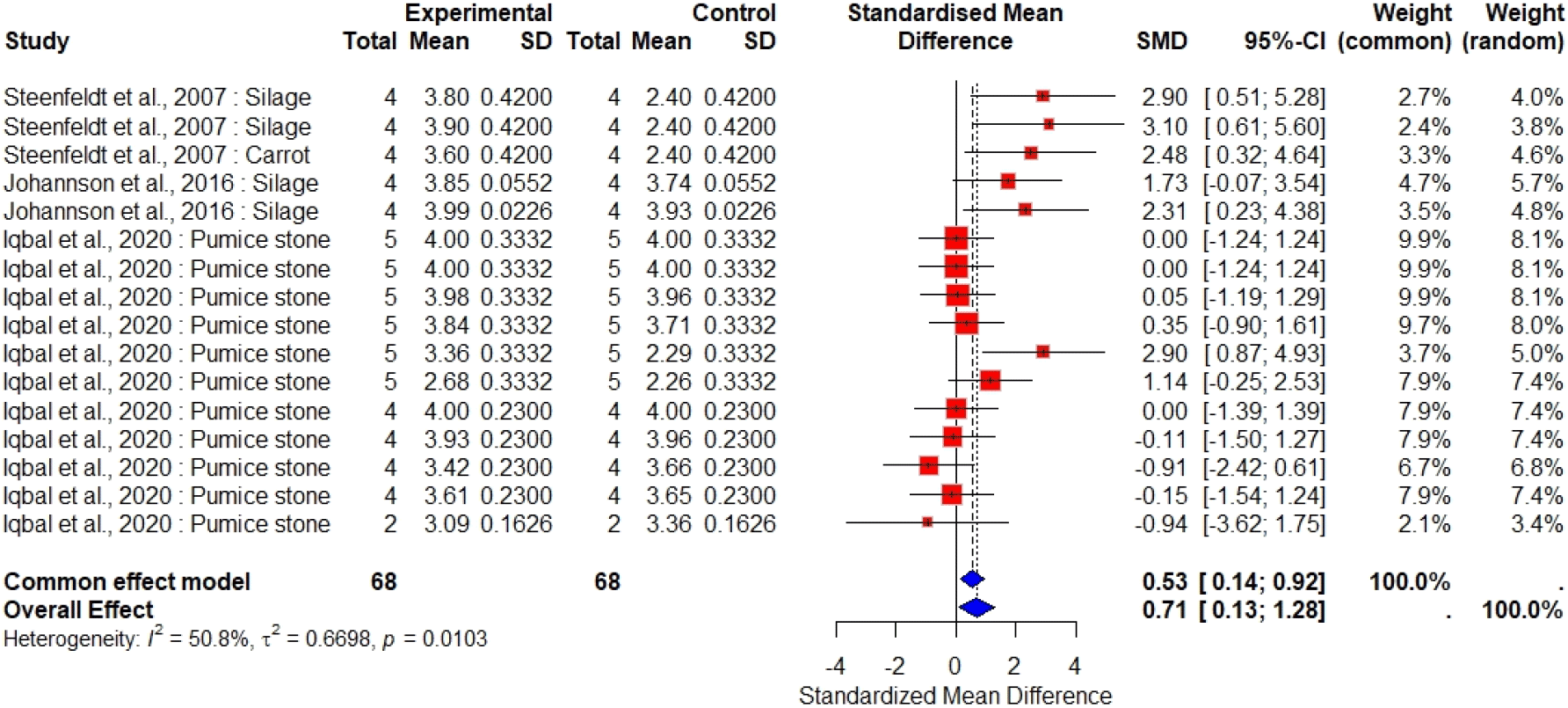
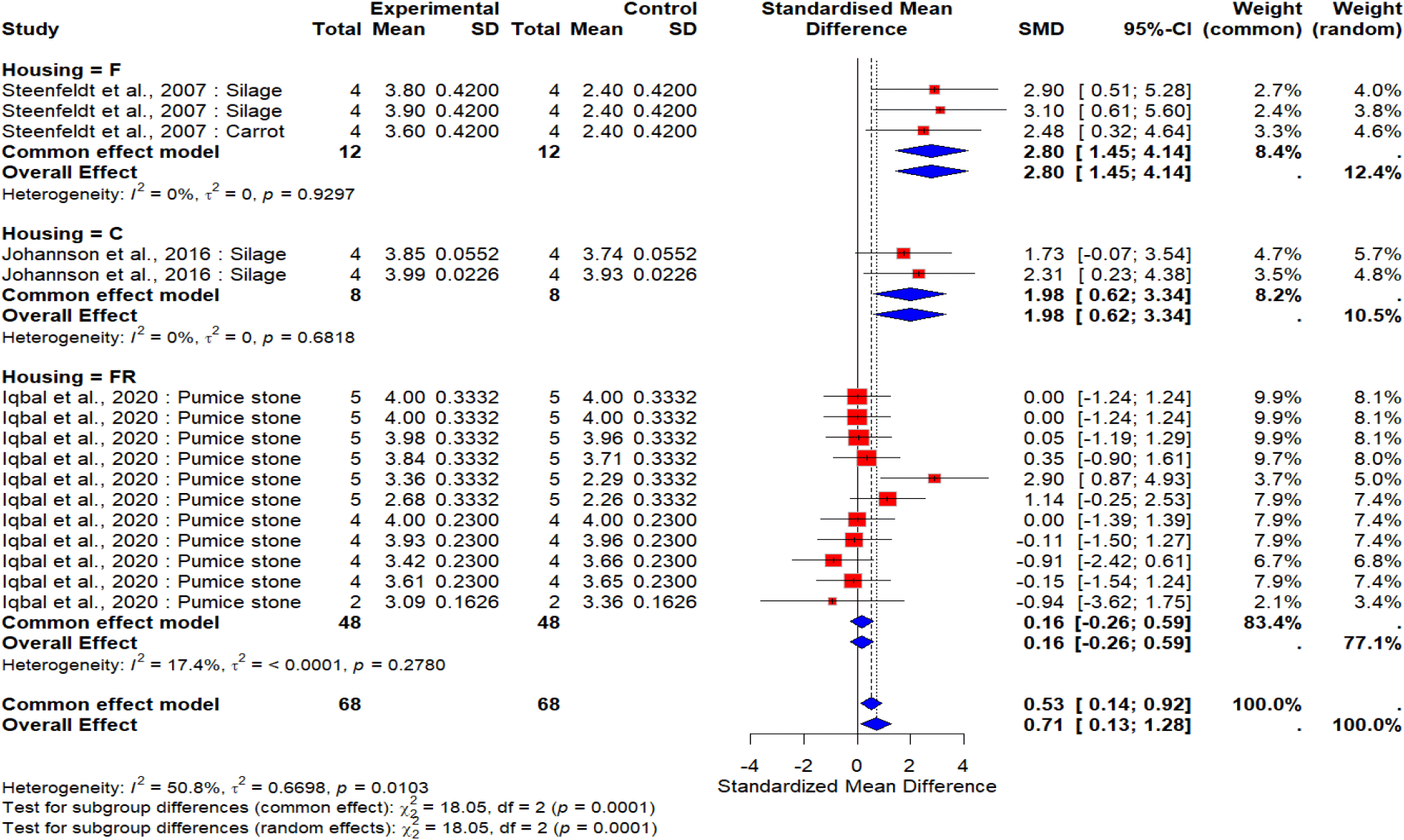
산란계의 날개 부위 깃털 상태에 대한 쪼는 물질 제공 효과는 Fig. 5에 나타냈다. 쪼는 물질 제공에 따라 날개 부위의 깃털 상태는 유의미하게 개선되었으며, 중간에서 큰 수준의 효과 크기를 보였다(SMD = 0.71; 95% CI: 0.13 to 1.28). 또한 연구 간 이질성은 높은 수준으로 확인되었다(I2 = 50.8%, τ2 = 0.6698, P = 0.0103). 하지만 하위 그룹 분석 결과, 사육시설에 따른 쪼는 물질 제공 효과에서 유의한 이질성은 관찰되지 않았다(Fig. 6).
kjps-53-1-49-g5
Fig. 5. Forest plot of the effects of environmental enrichment on wing feather condition in laying hens.
Download Original Figure
kjps-53-1-49-g6
Fig. 6. Forest plot of the effects of environmental enrichment on wing feather condition in laying hens, stratified by housing system.
Download Original Figure
5) 항문

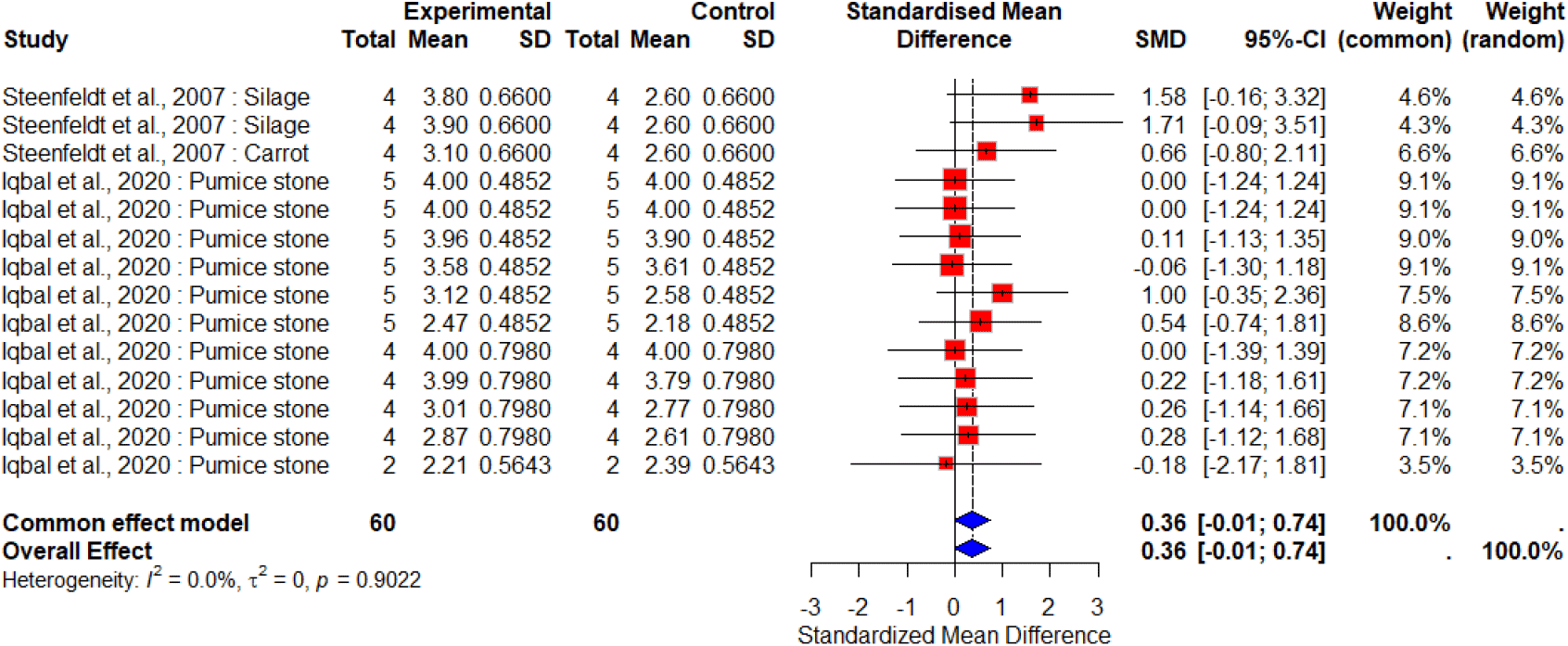
산란계의 항문 부위 깃털 상태에 대한 쪼는 물질 제공 효과는 Fig. 7과 같다. 쪼는 물질 제공은 항문 부위 깃털 상태 개선에 유의한 효과를 보이지 않았으며(SMD = 0.36; 95% CI: —0.01 to 0.74), 연구 간 이질성은 확인되지 않았다(I2 = 0.0%, τ2 = 0, P = 0.9022).
kjps-53-1-49-g7
Fig. 7. Forest plot of the effects of environmental enrichment on vent feather condition in laying hens.
Download Original Figure
6) 전반적인 깃털 점수

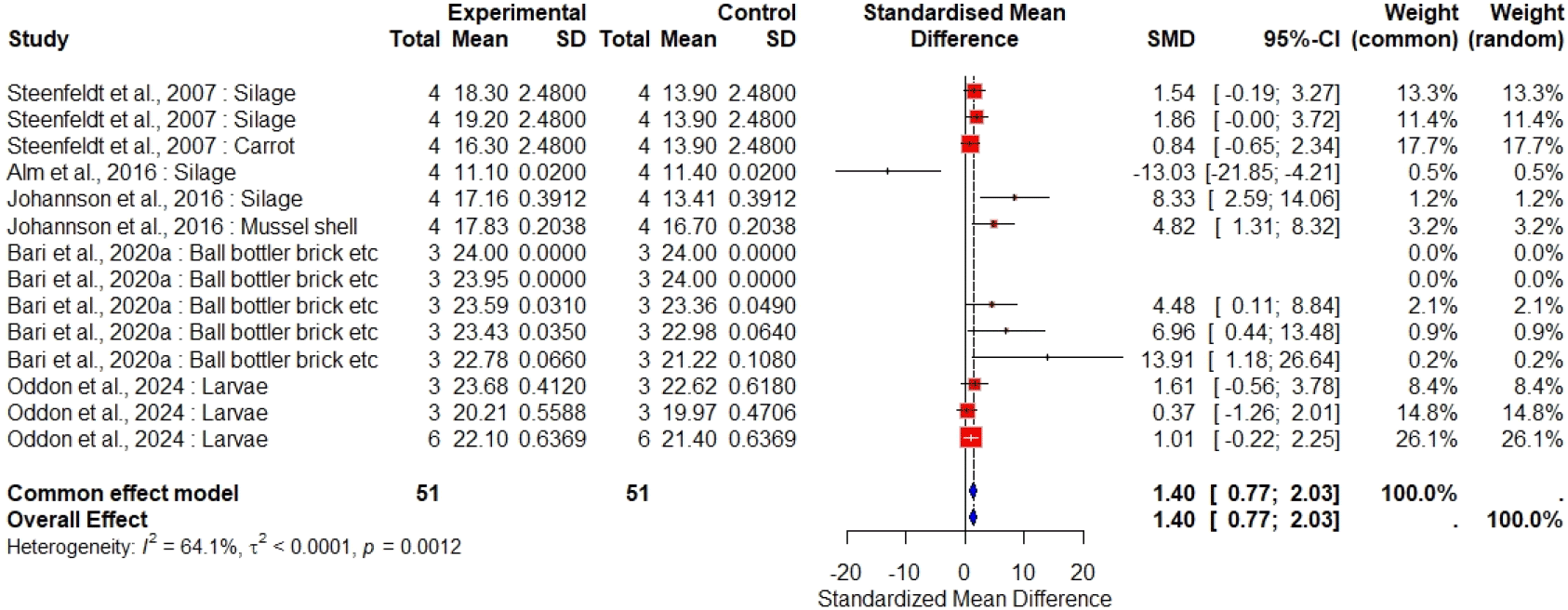
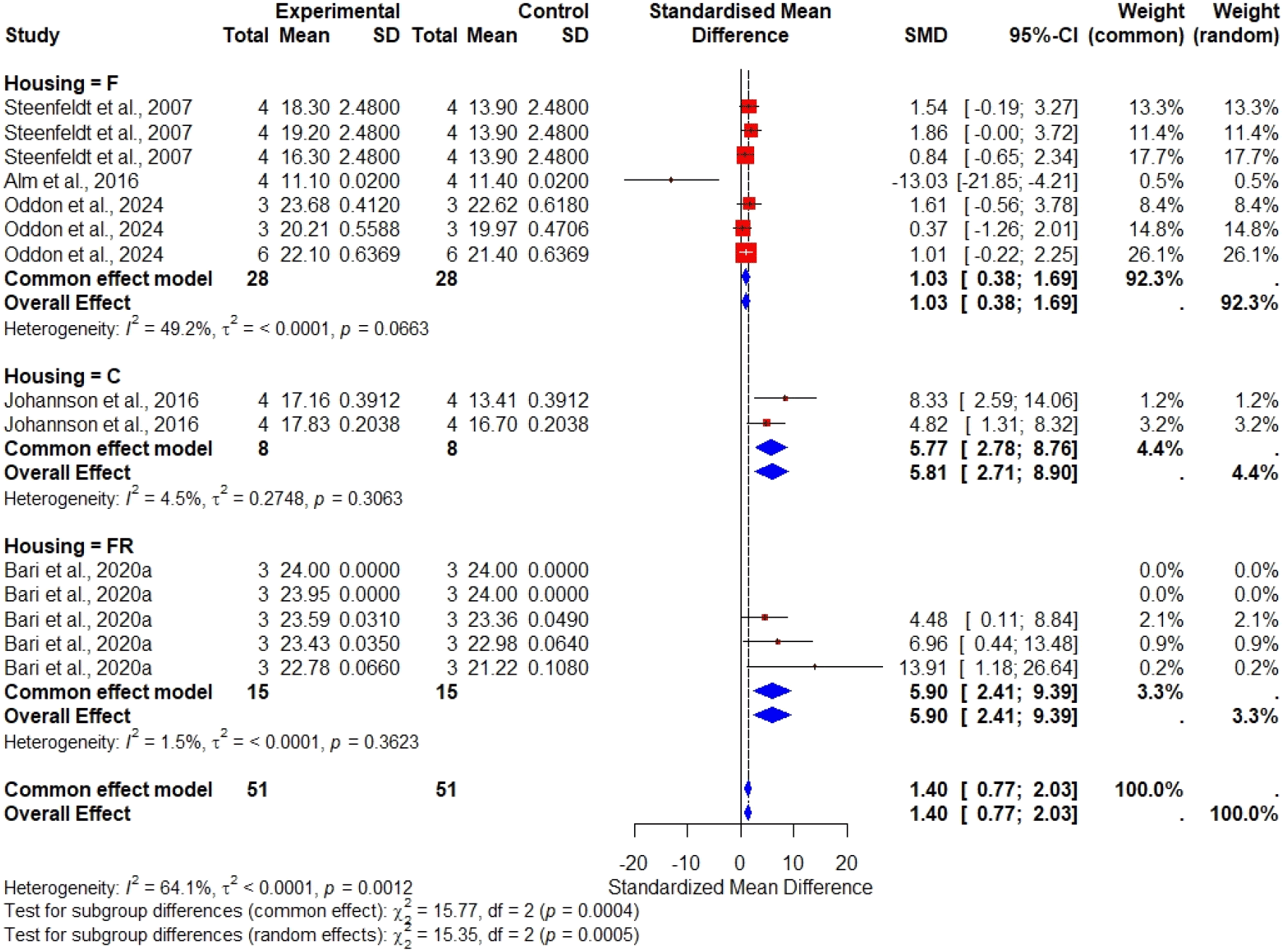
산란계의 쪼는 물질 제공에 따른 전반적인 깃털 개선 효과는 Fig. 8에 나타내었다. 쪼는 물질 제공은 산란계의 전반적인 깃털 상태를 유의하게 개선하였으며, 큰 효과 크기를 보였다(SMD = 1.40; 95% CI: 0.77 to 2.03). 한편, 연구 간 이질성은 높은 수준으로 확인되었으며(I2 = 64.1%, τ2<0.0001, P = 0.0012), 하위 그룹 분석 결과에서는 평사(floor) 사육시설에서 상대적으로 높은 이질성이 관찰되었다(I2 = 49.2%, τ2≤0.0001, P = 0.0663; Fig. 9).
kjps-53-1-49-g8
Fig. 8. Forest plot of the effect of environmental enrichment on overall feather score in laying hens.
Download Original Figure
kjps-53-1-49-g9
Fig. 9. Forest plot of the effects of environmental enrichment on overall feather score in laying hens, stratified by housing system.
Download Original Figure
2. 볏 상처 수

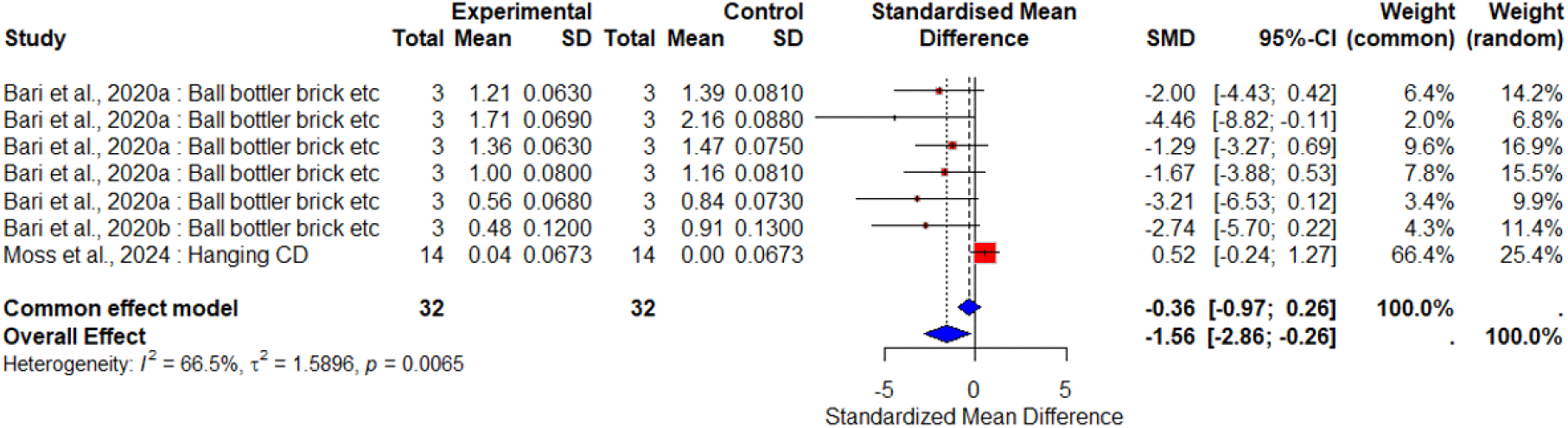
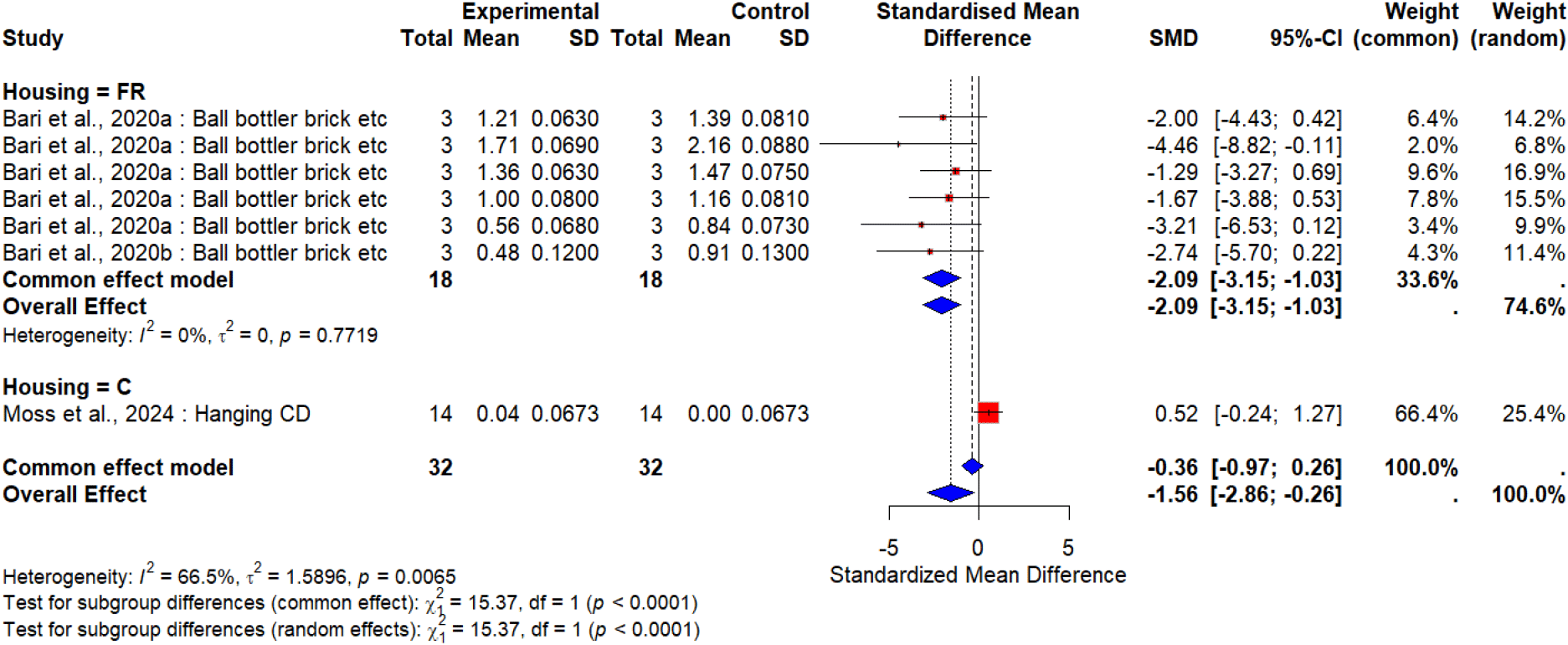
산란계의 볏 상처 수에 대한 쪼는 물질 제공 효과는 Fig. 10에 나타내었다. 쪼는 물질 제공은 산란계의 볏 상처 수를 유의하게 감소시켰으며, 큰 효과 크기를 보였다(SMD = —1.56; 95% CI: —2.86 to —0.26). 한편, 연구 간 이질성은 중간에서 높은 수준으로 확인되었다(I2 = 66.5%, τ2 = 1.5896, P = 0.0065). 하위 그룹 분석 결과, 사육시설에 따른 쪼는 물질 제공 효과에서 유의한 이질성은 관찰되지 않았다(Fig. 11).
kjps-53-1-49-g10
Fig. 10. Forest plot of the effect of environmental enrichment on the number of comb wounds in laying hens.
Download Original Figure
kjps-53-1-49-g11
Fig. 11. Forest plot of the effects of environmental enrichment on comb wounds in laying hens stratified by housing system.
Download Original Figure
3. 발톱 길이

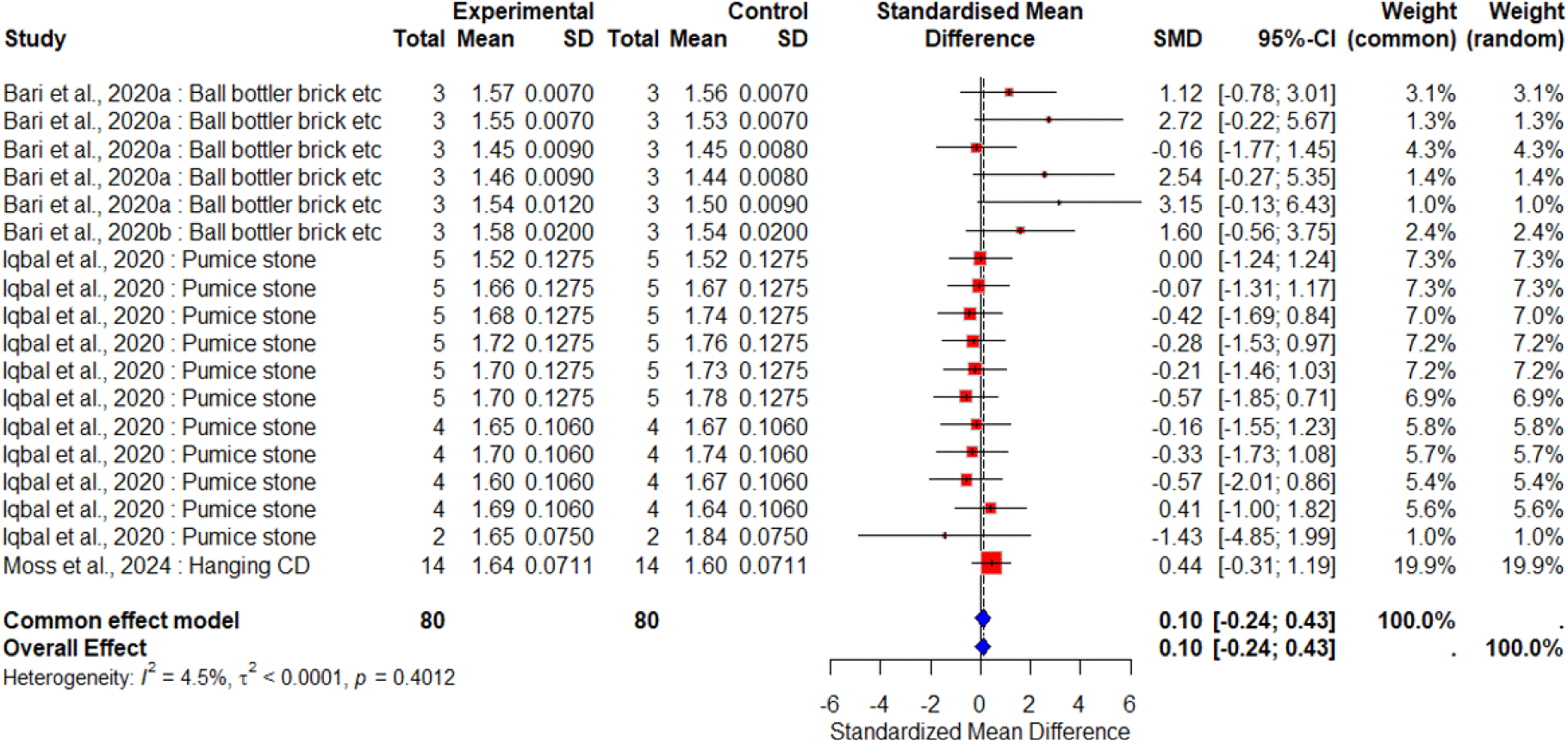
산란계 발톱 길이에 대한 쪼는 물질 제공 효과는 Fig. 12에 나타내었다. 쪼는 물질 제공은 산란계의 발톱 길이에 유의한 효과를 나타내지 않았으며 (SMD = 0.10; 95% CI: —0.24 to 0.43), 연구 간 이질성은 낮은 수준으로 확인되었다(I2 = 4.5%, τ2<0.0001, P = 0.4012).
kjps-53-1-49-g12
Fig. 12. Forest plot of the effect of environmental enrichment on claw length in laying hens.
Download Original Figure

고 찰

깃털 손상도는 산란계의 복지 수준을 반영하는 핵심 지표로, 체온 조절 능력 저하, 피부 노출로 인한 상처 및 감염 위험 증가, 에너지 요구량 증가 등 다양한 부정적 결과와 연관된다(Tahamtani et al., 2022). 특히 깃털 손상도는 깃털 쪼기와 같은 비정상적 이상 행동의 누적 결과를 반영하며, 이는 사육 밀도, 환경 풍부화 수준, 사료 영양 균형 등 관리 요인과 밀접하게 연관되어 있다(Kjaer and Bessei, 2013; Liebers et al., 2019; van Staaveren et al., 2021). 이러한 이유로 깃털 손상도는 단순한 외형적 지표를 넘어, 산란계 사육 환경의 적절성과 관리 수준을 종합적으로 평가하는 척도로 활용될 수 있다.

메타분석 결과, 쪼는 물질 제공은 산란계의 깃털 손상도를 전반적으로 감소시키는 데 효과적인 것으로 나타났다. 특히 목, 등, 날개 부위에서 유의한 개선 효과가 확인되었으며, 이 중 날개 부위에서는 큰 효과 크기가 관찰되어 산란계 복지 개선에 실질적인 영향을 미칠 수 있음을 시사한다(Andrade, 2020). 선행연구에 따르면 산란계의 쪼기 행동으로 인해 주로 손상되는 부위는 목, 등, 꼬리, 날개로 보고되고 있다(Schwarzer et al., 2022). 이러한 쪼기 행동은 사회적 위계 확립과 관련된 공격성 쪼기(aggressive pecking)와 비정상 행동으로 간주되는 깃털 쪼기로 구분되며, 행동 특성에 따라 특정 신체 부위에서 심각한 깃털 손상을 유발하는 것으로 알려져 있다(Bilcík and Keeling, 1999; Nicol et al., 2013). 특히 Schwarzer et al.(2022)은 목과 등 부위의 깃털 상태는 개체의 전반적인 깃털 상태 평가와 유의한 상관관계를 보인다고 보고하였다. 이를 종합할 때, 환경 풍부화물로써 쪼는 물질을 제공하는 것은 산란계의 탐색 및 쪼기 행동을 대체 대상으로 분산시켜 개체 간 깃털 쪼기 행동을 감소시키고, 결과적으로 깃털 손상을 완화하는 데 효과적인 것으로 판단된다(van Staaveren et al., 2021).

한편, 쪼는 물질 제공을 통한 환경 풍부화는 산란계의 사육 주령과 쪼는 물질의 유형에 따라 그 효과가 다르게 나타난다. 짚, 건초, 곡물 등은 탐색 및 채집 행동을 자극하는 채집형(foraging-type) 물질로, 산란계의 먹이 탐색 행동 욕구를 충족시켜 깃털 쪼기에 의한 피해를 완화하는 것으로 보고되었다(Rodenburg et al., 2013; van Staaveren et al., 2021). 반면 쇠구슬이나 체인과 같은 조작성 물질(manipulable pecking materials)은 주의 분산에 기여할 수 있으나, 쪼는 물질에 의한 자극의 복잡성 또는 섭취 가능 여부에 따라 효과 지속성이 제한될 수 있다(Huber-Eicher and Wechsler, 1998; Hartcher and Jones, 2017; Schreiter et al., 2019; Xu et al., 2022). 부석이나 단단한 블록 형태의 물질은 행동 자극 외에도 부리 마모를 통한 피해 저감을 기대할 수 있으나, 그 효과는 연구 간 일관성은 없었다(Schreiter et al., 2019). 또한 육성기 또는 산란 초기와 같이 행동 발달이 활발한 시기에 쪼는 물질을 제공할 경우, 탐색 및 쪼기 행동이 적절한 대상으로 학습되어 이후 깃털 쪼기 행동의 발생 위험을 낮출 수 있다(Rodenburg et al., 2013; de Haas et al., 2014). 산란 후기는 행동이 이미 고착화된 단계로, 쪼는 물질 제공에 따라 행동 교정 효과가 제한적일 수 있다(Nicol et al., 2013; van Staaveren et al., 2021). 이는 쪼는 물질이 산란계의 본능적 행동 욕구를 얼마나 효과적으로 충족시키는지에 따라 깃털 쪼기 저감 효과가 달라질 수 있음을 의미한다. 따라서 효과적인 쪼는 물질 유형의 탐색과 환경 풍부화물 적용 시기에 대해 지속적으로 연구할 필요가 있다.

일부 연구에서는 깃털 손상도 외에도 쪼는 물질 제공에 따라 볏 상처 수 및 발톱 길이와 같은 신체적 복지 지표가 개선되는 효과가 보고되었으며, 그중 볏 상처 수에는 유의한 개선 효과가 관찰되었다. 볏 상처는 주로 공격성 쪼기 행동, 사회적 위계 형성 과정, 그리고 밀집 사육 환경에서의 경쟁 행동 빈도와 밀접하게 관련된 지표로 알려져 있다(Rodenburg et al., 2013; Marchewka et al., 2020; Jeon et al., 2025). 다수의 연구에서 쪼는 물질 제공에 따른 행동 패턴의 전환이 공격적 상호작용 및 신체 상처 발생 빈도의 감소와 연관되는 경향이 보고되었다(Lambton et al., 2010; Nicol et al., 2013; Hartcher and Jones, 2017). 특히 채집형 쪼는 물질은 산란계의 탐색 및 채집 행동을 촉진함으로써 좌절 관련 이상 행동을 완화하고, 볏 및 기타 신체 손상을 감소시키는 것으로 보고되었다(Dixon et al., 2010; Rodenburg et al., 2013). 한편, 과도하게 길어진 발톱은 개체 간 긁힘 상처 증가, 깃털 손상 악화, 횃대 이용성 저하로 이어질 수 있으며(Tauson and Abrahamsson, 1996; Blatchford et al., 2016), 볏짚, 모래, 단단한 블록 형태와 같이 바닥을 긁거나 쪼는 행동을 유도하는 물질은 자연스러운 마찰을 통해 발톱 마모를 촉진함으로써 발톱 길이 조절에 기여할 수 있다(Campbell et al., 2019; Schreiter et al., 2019; van Staaveren et al., 2021). 이러한 결과를 종합하면, 쪼는 물질 제공은 특정 복지 지표의 개선에 국한되기보다는 공격적 상호작용 감소와 신체 부위의 자연적 마모를 유도함으로써 산란계의 전반적인 복지 수준을 향상시키는 환경 풍부화 방안으로 고려할 수 있다.

그러나 본 연구에서 분석한 일부 깃털 부위의 손상도와 볏 상처 수 지표에서는 연구 간 높은 이질성이 관찰되었다. 메타분석에서 이질성은 개별 연구에서 보고된 효과 크기가 서로 얼마나 상이한지를 나타내는 지표이다. 이러한 이질성은 모집단의 특성, 연구 설계 및 분석 방법 차이에 따라 달라질 수 있으며, 높은 이질성은 포함된 연구들 간 효과 크기의 변동성이 크다는 것을 의미한다(Ruppar, 2020; Holzmeister et al., 2024). 이때 낮은 P value와 높은 I2 값의 조합은 통합 효과 추정치의 신뢰도를 저하시킬 수 있다(Alba et al., 2016). Ruppar(2020)는 모든 메타분석에서 일정 수준의 이질성이 예상되나, 그중 메타분석에 포함된 연구의 수가 이질성 추정에 영향을 미치는 요인이라고 보고하였다. 또한 IntHout et al.(2015)은 연구 규모가 작을 경우 이질성 추정이 불안정해질 수 있으며, 신뢰도가 높은 I2 값을 산출하기 위해서 최소한의 연구 및 실험 수를 확보할 필요가 있다고 언급하였다. 이와 함께, 일부 지표에서 비교적 큰 SMD 값이 관찰되었다. SMD는 평균 차이를 표준편차로 표준화한 지표로, 집단 간 차이가 크거나 자료의 변동성이 낮은 경우 크게 나타날 수 있으며, 특히 소표본 연구(small studies)에서는 편향이 발생할 가능성이 있다(Doncaster and Spake, 2018; Andrade, 2020; Caldwell and Vigotsky, 2020). 따라서 큰 SMD 값은 집단 간 차이가 뚜렷함을 시사할 수 있으나, 해석 시에는 연구 설계와 특성을 함께 고려할 필요가 있다.

한편, 본 연구에서 깃털 손상도 지표에 대한 분석의 일관성 확보를 위하여 4점 척도(Tauson et al., 2005) 기준을 적용한 연구만 수집하였다. 선행 연구에 따르면 산란계의 다양한 신체 부위를 대상으로 서로 다른 평가 척도가 사용되고 있으며, 이는 연구 간 비교를 어렵게 하고 데이터 통합에 제한을 초래할 수 있다(van Staaveren et al., 2021). 또한, 서로 다른 척도를 하나의 기준으로 변환하여 비교하는 방법의 적절성에 대해서도 논의가 필요하며 연구 간 일관성 확보를 위해 깃털 손상도 평가 기준의 표준화가 요구된다.

이러한 점을 고려할 때, 본 연구는 다음과 같은 한계점을 가진다. 첫째, 분석에 포함된 연구에서 사용된 쪼는 물질의 유형이 다양하여 효과 크기 해석에 변이가 존재할 수 있다. 둘째, 산란계의 품종과 연령, 실험 기간 및 사육 시설 등 환경적 조건이 상이하였으며, 이러한 요인들은 연구 간 이질성에 영향을 미쳤을 가능성이 있다. 셋째, 쪼는 물질 제공에 따른 산란계의 복지 지표를 분석한 연구가 제한적이었다. 넷째, 산란계 깃털 손상도 평가 기준의 다양성은 연구 간 효과 크기의 비교 가능성을 저하시켜 메타분석 결과 해석에 제약을 주었다. 마지막으로, 본 연구는 영어 문헌으로 제한하였다는 점에서 언어 편향(language bias)의 가능성을 배제할 수 없으며, 이에 따라 결과 해석 시 주의가 필요하다(Jüni et al., 2002; Morrison et al., 2012; Stern and Kleijnen, 2020). 따라서 향후 연구에서는 산란계의 복지 수준을 극대화할 수 있는 쪼는 물질의 유형 및 제공 조건에 대한 체계적인 탐색이 필요하다. 이를 위해 품종, 연령 및 사육 환경 등의 주요 요인을 통제한 실험 설계가 요구된다. 또한 깃털 손상도를 비롯한 복지 지표 평가의 표준화된 기준을 확립하고, 장기적 효과를 반영할 수 있는 연구 수행이 필요하다. 이러한 접근은 연구 간 이질성을 줄이고 비교 가능성을 향상시켜, 환경 풍부화를 활용한 산란계의 동물 복지 관리 전략 수립에 기여할 수 있을 것으로 기대된다.

적 요

본 메타분석은 산란계에 쪼는 물질을 제공하는 환경 풍부화가 깃털 손상도 및 일부 신체적 복지 지표에 미치는 영향을 종합적으로 평가하였다. 체계적인 문헌 검색과 선정 기준에 따라 최종 8편의 논문, 10개 실험의 데이터를 분석하였다. 연구 간 이질성은 τ2, Cochrane’s Q 통계량 및 I2 지표를 활용하여 평가하였다. 분석 결과, 쪼는 물질 제공은 목, 등, 날개 부위 및 전반적인 신체 깃털 손상도에서 유의한 개선 효과를 보였으며, 볏 상처 수 감소에도 긍정적인 영향을 나타냈다. 이는 쪼기 행동의 표적 전환과 탐색·채집 행동 촉진을 통해 이상 행동을 완화한 결과로 해석될 수 있다. 종합하면, 쪼는 물질 제공은 산란계의 행동적·신체적 복지를 향상시킬 수 있는 실질적인 환경 풍부화 전략으로 판단된다. 다만, 포함된 연구 수가 제한적이고, 사육 환경, 평가 기준 및 쪼는 물질 유형의 차이로 인한 이질성이 존재하므로 결과 해석에는 신중함이 요구된다. 향후 표준화된 평가 방법을 적용한 추가 연구와 장기적·대규모 실험 자료의 축적이 이루어진다면 보다 명확하고 일반화 가능한 결론을 도출할 수 있을 것으로 기대된다.

사 사

본 연구는 농촌진흥청의 공동연구사업(과제번호 RS-2021-RD009994)에 의해 이루어진 것으로 이에 감사드립니다.

REFERENCES

1.

Adugna C, Wang K, Du J, Li C 2024 Deoxynivalenol mycotoxin dietary exposure on broiler performance and small intestine health: a comprehensive meta-analysis. Poult Sci 103(12):104412.

2.

Alba AC, Alexander PE, Chang J, MacIsaac J, DeFry S, Guyatt GH 2016 High statistical heterogeneity is more frequent in meta-analysis of continuous than binary outcomes. J Clin Epidemiol 70:129-135.

3.

Alm M, Tauson R, Wall H 2017 Mussel shells as an environment enrichment and calcium source for floor-housed laying hens. J Appl Poult Res 26(2):159-167.

4.

Andrade C 2020 Mean difference, standardized mean difference (SMD), and their use in meta-analysis: as simple as it gets. J Clin Psychiatry 81(5):20f13681-20f13681.

5.

Ayalew A, Girma Y 2025 The Effect of age on agricultural technology adoption by smallholder farmers in Ethiopia: a systematic review and meta-analysis. Adv Agric 2025(1):8881484.

6.

Bari MS, Downing JA, Dyall TR, Lee C, Campbell DL 2020a Relationships between rearing enrichments, range use, and an environmental stressor for free-range laying hen welfare. Front Vet Sci 7:480.

7.

Bari MS, Laurenson YC, Cohen-Barnhouse AM, Walkden-Brown SW, Campbell DL 2020b Effects of outdoor ranging on external and internal health parameters for hens from different rearing enrichments. PeerJ 8:e8720.

8.

Bilcik B, Keeling LJ 1999 Changes in feather condition in relation to feather pecking and aggressive behaviour in laying hens. Br Poult Sci 40(4):444-451.

9.

Blatchford RA, Fulton RM, Mench JA 2016 The utilization of the Welfare Quality® assessment for determining laying hen condition across three housing systems. Poult Sci 95(1):154-163.

10.

Byrne L, Ross S, Taylor-Pickard J, Murphy R 2023 The Effect of organic trace mineral supplementation in the form of proteinates on performance and sustainability parameters in laying hens: a meta-Analysis. Animals 13(19):3132.

11.

Caldwell A, Vigotsky AD 2020 A case against default effect sizes in sport and exercise science. PeerJ 8:e10314.

12.

Campbell DLM, De Haas EN, Lee C 2019 A review of environmental enrichment for laying hens during rearing in relation to their behavioral and physiological development. Poult Sci 98(1):9-28.

13.

De Haas EN, Bolhuis JE, Kemp B, Groothuis TG, Rodenburg TB. 2014 Parents and early life environment affect behavioral development of laying hen chickens. PLOS ONE 9(3):e90577.

14.

Dixon LM, Duncan IJH, Mason GJ 2010 The effects of four types of enrichment on feather-pecking behaviour in laying hens housed in barren environments. Anim Welf 19(4):429-435.

15.

Doncaster CP, Spake R 2018 Correction for bias in meta-analysis of little replicated studies. Methods Ecol. Evol 9(3):634-644.

16.

Fijn LB, van der Staay FJ, Goerlich-Jansson VC, Arndt SS 2020 Importance of basic research on the causes of feather pecking in relation to welfare. Animals 10(2):213.

17.

Fiorilla E, Ozella L, Sirri F, Zampiga M, Piscitelli R, Tarantola M, Ponzio P, Mugnai C 2024 Effects of housing systems on behaviour and welfare of autochthonous laying hens and a commercial hybrid. Appl Anim Behav Sci 274:106247.

18.

Glatz PC 2002 Claw abrasives in layer cages: a review. Int J Poult Sci 1(1-3):1-5.

19.

Hartcher KM, Jones B 2017 The welfare of layer hens in cage and cage-free housing systems. World’s Poult Sci J 73(4):767-782.

20.

Holzmeister F, Johannesson M, Böhm R, Dreber A, Huber J, Kirchler M 2024 Heterogeneity in effect size estimates. Proc Natl Acad Sci USA 121(32):e2403490121.

21.

Huber-Eicher BEAT, Wechsler B 1998 The effect of quality and availability of foraging materials on feather pecking in laying hen chicks. Anim Behav 55(4):861-873.

22.

IntHout J, Ioannidis JP, Borm GF, Goeman JJ 2015 Small studies are more heterogeneous than large ones: a meta-meta-analysis. J Clin Epidemiol 68(8):860-869.

23.

Iqbal Z, Drake K, Swick RA, Taylor PS, Perez-Maldonado RA, Ruhnke I 2020 Effect of pecking stones and age on feather cover, hen mortality, and performance in free-range laying hens. Poult Sci 99(5):2307-2314.

24.

Irawan A, Hidayat C, Jayanegara A, Ratriyanto A 2020 Essential oils as growth-promoting additives on performance, nutrient digestibility, cecal microbes, and serum metabolites of broiler chickens: a meta-analysis. Anim Biosci 34(9):1499.

25.

Janczak AM, Riber AB 2015 Review of rearing-related factors affecting the welfare of laying hens. Poult Sci 94(7):1454-1469.

26.

Jeon H, Shin H, Lee J, Kim J, Biswas S, Lee J, Yun J 2025 Welfare characteristics of laying hens in aviary and cage systems. Poult Sci 104(5):104987.

27.

Johannson SG, Raginski C, Schwean-Lardner K, Classen HL 2016 Providing laying hens in group-housed enriched cages with access to barley silage reduces aggressive and feather-pecking behaviour. Can J Anim Sci 96(2):161-171.

28.

Jüni P, Holenstein F, Sterne J, Bartlett C, Egger M 2002 Direction and impact of language bias in meta-analyses of controlled trials: empirical study. Int J Epidemiol 31(1):115-123.

29.

Kerr AK, Farrar AM, Waddell LA, Wilkins W, Wilhelm BJ, Bucher O, Wills RW, Bailey RH, Varga C, McEwen SA, Rajić, A 2013 A systematic review-meta-analysis and meta-regression on the effect of selected competitive exclusion products on Salmonella spp. prevalence and concentration in broiler chickens. Prev Vet Med 111(1-2):112-125.

30.

Kjaer JB, Bessei W 2013 The interrelationships of nutrition and feather pecking in the domestic fowl: a review. Eur Poult Sci 77(1):1-9.

31.

Lambton SL, Knowles TG, Yorke C, Nicol CJ 2010 The risk factors affecting the development of gentle and severe feather pecking in loose housed laying hens. Appl Anim Behav Sci 123(1-2):32-42.

32.

Lay Jr DC, Fulton RM, Hester PY, Karcher DM, Kjaer JB, Mench JA, Mullens BA, Newberry RC, Nicol CJ, O’Sullivan NP, Porter RE 2011 Hen welfare in different housing systems. Poult Sci 90(1):278-294.

33.

Liebers CJ, Schwarzer A, Erhard M, Schmidt P, Louton H 2019 The influence of environmental enrichment and stocking density on the plumage and health conditions of laying hen pullets. Poult Sci 98(6):2474-2488.

34.

Lutz V, Stratz P, Preuß S, Tetens J, Grashorn MA, Bessei W, Bennewitz J 2017 A genome-wide association study in a large F2-cross of laying hens reveals novel genomic regions associated with feather pecking and aggressive pecking behavior. Genet Sel Evol 49(1):18.

35.

Malik MI, Raboisson D, Zhang X, Sun X 2023 Effects of dietary chromium supplementation on dry matter intake and milk production and composition in lactating dairy cows: a meta-analysis. Front Vet Sci 10:1076777.

36.

Marchewka J, Sztandarski P, Zdanowska-Sąsiadek Ż, Damaziak K, Wojciechowski F, Riber AB, Gunnarsson S 2020 Associations between welfare and ranging profile in free-range commercial and heritage meat-purpose chickens (Gallus gallus domesticus). Poult Sci 99(9):4141-4152.

37.

Michel V, Berk J, Bozakova N, van Der Eijk J, Estevez I, Mircheva T, Relic R, Rodenburg TB, Sossidou EN, Guinebretière M 2022 The relationships between damaging behaviours and health in laying hens. Animals 12(8):986.

38.

Morrison A, Polisena J, Husereau D, Moulton K, Clark M, Fiander M, Mierzwinski-Urban M, Clifford T, Hutton B, Rabb, D 2012 The effect of English-language restriction on systematic review-based meta-analyses: a systematic review of empirical studies. Int J Technol Assess Health Care 28(2):138-144.

39.

Moss AF, Northey R, Sukirno Nawab A, Akter N, Taylor PS, Dao HT 2024 Evidence-based recommendations for effective enrichment to improve the welfare of caged hens used for research and teaching purposes. Poultry 3(4):354-363.

40.

Nicol CJ, Bestman M, Gilani AM, De Haas EN, De Jong IC, Lambton S, Wagenaar JP, Weeks CA, Rodenburg TB 2013 The prevention and control of feather pecking: application to commercial systems. World’s Poult Sci J 69(4):775-788.

41.

Nielsen SS, Alvarez J, Bicout DJ, Calistri P, Canali E, Drewe JA, Garin-Bastuji B, Rojas JLG, Schmidt CG, Herskin M, Chueca MÁM, Padalino B, Pasquali P, Robert HC, Spoolder H, Stahl K, Velarde A, Viltrop A, Winckler C, Estevez I, Guinebretière M, Rodenburg B, Schrader L, Tiemann I, Niekerk TV, Ardizzone M, Ashe S, Hempen M, Mosbach-Schulz O, Gimeno CR, der Stede YV, Vitali M, Michel V 2023 Welfare of laying hens on farm. EFSA J 21(2):e07789.

42.

Oddon SB, Biasato I, Ferrocino I, Imarisio A, Renna M, Caimi C, Gariglio M, Dabbou S, Pipan M, Dekleva D, Corvaglia MR, Bongiorno V, Macchi E, Cocolin L, Gasco L, Schiavone, A 2024 Live black soldier fly larvae as environmental enrichment for native chickens: implications for bird performance, welfare, and excreta microbiota. Animal 18(11):101341.

43.

Ogbuewu IP, Mbajiorgu CA 2023 Lipid profiles and production performance responses of laying hens to dietary Moringa oleifera leaf meal: systematic review and meta-analysis. Trop Anim Health Prod 55(4):277.

44.

Oliveira JL, Xin H, Chai L, Millman ST 2019 Effects of litter floor access and inclusion of experienced hens in aviary housing on floor eggs, litter condition, air quality, and hen welfare. Poult Sci 98(4):1664-1677.

45.

Orzuna-Orzuna JF, Lara-Bueno A 2023 Essential oils as a dietary additive for laying hens: performance, egg quality, antioxidant status, and intestinal morphology: a meta-analysis. Agriculture 13(7):1294.

46.

Patsopoulos NA, Evangelou E, Ioannidis JP 2008 Sensitivity of between-study heterogeneity in meta-analysis: proposed metrics and empirical evaluation. Int J Epidemiol 37(5):1148-1157.

47.

Riber AB, Hinrichsen LK 2017 Welfare consequences of omitting beak trimming in barn layers. Front Vet Sci 4:222.

48.

Rodenburg TB, Van Krimpen MM, De Jong IC, De Haas EN, Kops MS, Riedstra BJ, Nordquist RE, Wagenaar JP, Bestman M, Nicol CJ 2013 The prevention and control of feather pecking in laying hens: identifying the underlying principles. World’s Poult Sci J 69(2):361-374.

49.

Roenchen S, Scholz B, Hamann H, Distl O 2007 Foot pad health, plumage condition, integument and claw length of Lohmann Silver laying hens kept in small aviary housing systems, furnished cages and an aviary housing system. Arch Anim Breed 50(4):388-402.

50.

Ruppar T 2020 Meta-analysis: how to quantify and explain heterogeneity? Eur J Cardiovasc Nurs 19(7):646-652.

51.

Sandilands V, Baker L, Donbavand J, Brocklehurst S 2022 Do Hens Use Enrichments Provided in Free-Range Systems? Animals 12(8):995.

52.

Schreiter R, Damme K, von Borell E, Vogt I, Klunker M, Freick M 2019 Effects of litter and additional enrichment elements on the occurrence of feather pecking in pullets and laying hens: a focused review. Vet Med Sci 5(4):500-507.

53.

Schwarzer A, Rauch E, Erhard M, Reese S, Schmidt P, Bergmann S, Plattner C, Kaesberg A, Louton H 2022 Individual plumage and integument scoring of laying hens on commercial farms: correlation with severe feather pecking and prognosis by visual scoring on flock level. Poult Sci 101(10):102093.

54.

Shi H, Li B, Tong Q, Zheng W 2019 Effects of different claw-shortening devices on claw condition, fear, stress, and feather coverage of layer breeders. Poult Sci 98(8):3103-3113.

55.

Shi H, Wang J, Kim WK 2024 Interactive effects of calcium, phosphorus, and exogenous phytase on growth performance and bone ash in broilers under Eimeria or necrotic enteritis infections: a systemic review and meta-analysis. J Appl Poultry Res 33(2):100422.

56.

Son J, Lee WD, Kim HJ, Kang BS, Kang HK 2022 Effect of providing environmental enrichment into aviary house on the welfare of laying hens. Animals 12(9):1165.

57.

Steenfeldt S, Kjaer JB, Engberg RM 2007 Effect of feeding silages or carrots as supplements to laying hens on production performance, nutrient digestibility, gut structure, gut microflora and feather pecking behaviour. Br Poult Sci 48(4):454-468.

58.

Stern C, Kleijnen J 2020 Language bias in systematic reviews: you only get out what you put in. JBI Evid Synth 18(9):1818-1819.

59.

Tahamtani FM, Kittelsen K, Vasdal G 2022 Environmental enrichment in commercial flocks of aviary housed laying hens: relationship with plumage condition and fearfulness. Poult Sci 101(4):101754.

60.

Tauson R, Abrahamsson P 1996 Foot and keel bone disorders in laying hens: effects of artificial perch material and hybrid. Acta Agric Scand A Anim Sci 46(4):239-246.

61.

Tauson R, Kjaer J, Maria GA, Cepero R, Holm KE 2005 Applied scoring of integument and health in laying hens. Anim Sci Pap Rep 23(Suppl 1):153-159.

62.

van Staaveren N, Ellis J, Baes CF, Harlander-Matauschek A 2021 A meta-analysis on the effect of environmental enrichment on feather pecking and feather damage in laying hens. Poult Sci 100(2):397-411.

63.

Xu D, Shu G, Liu Y, Qin P, Zheng Y, Tian Y, Zhao X, Du X 2022 Farm environmental enrichments improve the welfare of layer chicks and pullets: a comprehensive review. Animals 12(19):2610.

64.

Yunitasari F, Jayanegara A, Ulupi N 2023 Performance, egg quality, and immunity of laying hens due to natural carotenoid supplementation: a meta-analysis. Food Sci Anim Resour 43(2):282.

65.

Zepp M, Louton H, Erhard M, Schmidt P, Helmer F, Schwarzer A 2018 The influence of stocking density and enrichment on the occurrence of feather pecking and aggressive pecking behavior in laying hen chicks. J Vet Behav 24:9-18.

66.

Zhang X, Zhang Y, Geng J, Pan J, Huang X, Rao X 2022 Feather damage monitoring system using rgb-depth-thermal model for chickens. Animals 13(1):126.